


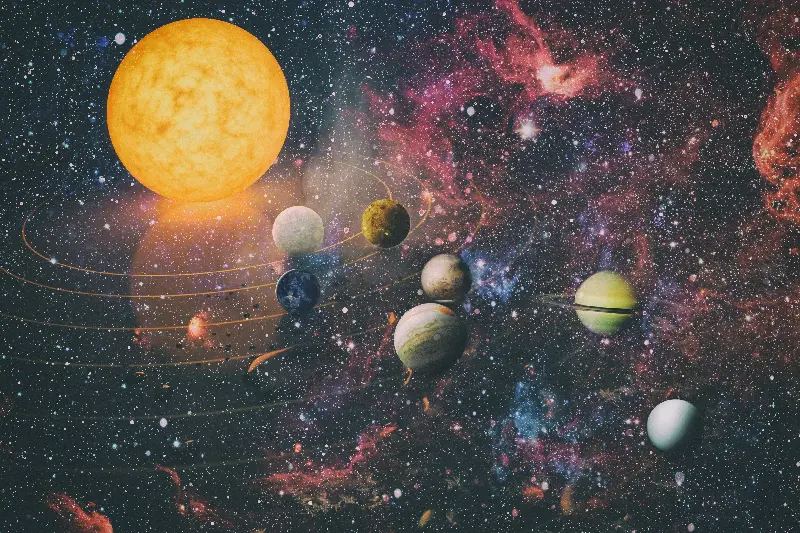
Our solar system is full of dazzling wonders, strange happenings, and unsolved mysteries that go far beyond what you might have learned in school. From bizarre planetary weather to celestial bodies with unexpected features, the solar neighborhood constantly surprises scientists. Ready to have your mind blown? Here’s a look at some of the most outrageous and mind-bending discoveries that have utterly transformed our understanding of the universe.
GAS GIANTS THAT RAIN DIAMONDS
Let’s start with a truly sparkling fact. On both Jupiter and Saturn, lightning storms and intense pressure in the atmosphere are capable of turning methane into soot, which then hardens into chunks of graphite and diamond as it falls through the dense gaseous layers.
- The Scale: Some researchers estimate that it may literally rain thousands of tons of diamonds on these planets every year.
- The Catch: Imagine a world where "bling" is falling from the sky—but getting there to collect it involves surviving pressures that would crush a diamond itself.
THE GREAT RED SPOT: A STORM OLDER THAN MODERN CIVILIZATION
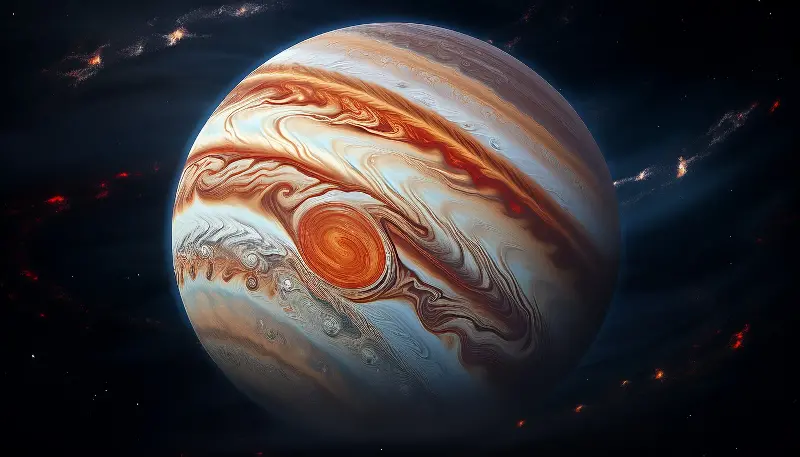
Jupiter’s Great Red Spot is so familiar in images that we sometimes forget how wild it really is. This storm system, roughly twice as wide as Earth, has been raging for at least three and a half centuries—maybe a lot longer.
- It is a hurricane on a scale that dwarfs anything seen here.
- While it has been observed shrinking in recent decades, it remains a robust monument to the sheer unpredictability of planetary weather.
SATURN’S HEXAGON: THE BIZARRE SIX-SIDED CLOUD PATTERN
Nothing on Earth compares to what’s spinning on the crown of Saturn. At the planet’s north pole is a gigantic, persistent hexagon-shaped pattern in the clouds, more than 20,000 miles across.
- First captured by the Voyager spacecraft in the 1980s.
- Experiments suggest that different wind speeds at various latitudes can create such a shape, but the full story remains a cosmic puzzle.
VENUS: HOME OF THE HOTTEST SURFACE IN THE SOLAR SYSTEM
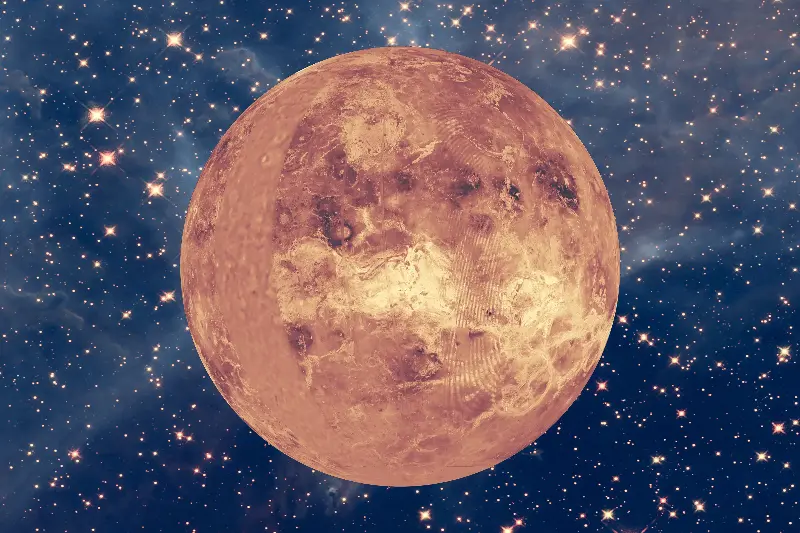
With a thick carbon dioxide atmosphere and clouds of sulfuric acid, Venus is Earth’s ferocious twin—only much, much hotter. Because of the intense greenhouse effect, this world boasts surface temperatures hot enough to melt lead, reaching up to 900°F (475°C). That’s even hotter than the surface of Mercury, despite Venus being further from the sun.
PULSATING AURORAE ON URANUS
Earth’s polar lights are famously beautiful, but the aurorae of Uranus are something else entirely. In 2011, astronomers discovered that the planet’s aurorae don’t follow any predictable cycles. Instead, they pulsate in an irregular fashion. This strange behavior is linked to the way Uranus spins almost on its side, presenting a unique case of how a planet’s tilt shapes its celestial phenomena.
MARS’ DISAPPEARING WATER: TRACES OF ANCIENT OCEANS
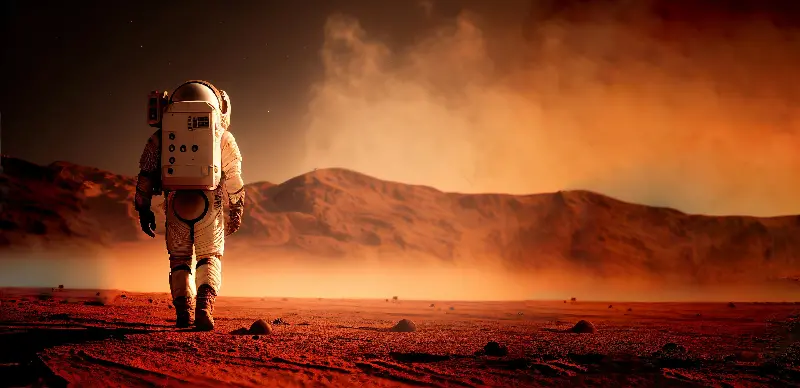
Mars is a desert today, yet evidence continues to mount that it was once awash with water. Ancient coastlines and the massive Valles Marineris canyon suggest the Red Planet hosted vast oceans billions of years ago.
- The Loss: Mars may have lost as much as 87 percent of its water to space.
- The Cause: This was likely due to its weaker gravity and a fading magnetic field.
THE KUIPER BELT’S FROZEN WORLDS
Beyond Neptune lies a vast, icy territory known as the Kuiper Belt. Its most famous resident, Pluto, was shockingly revealed to be geologically active in 2015.
- The heart-shaped region is a nitrogen ice plain with active glaciers.
- This hints at hidden energy sources and evolving landscapes far from the sun's warmth.
MERCURY’S PERPETUAL SUNRISES AND SUNSETS
If you stood on Mercury’s surface, you’d experience a sunrise, only to see the sun reverse direction, dip partway down, rise again, and then eventually set. This is due to Mercury’s highly eccentric orbit and its unusual spin-orbit resonance: it rotates three times for every two trips around the sun.
