


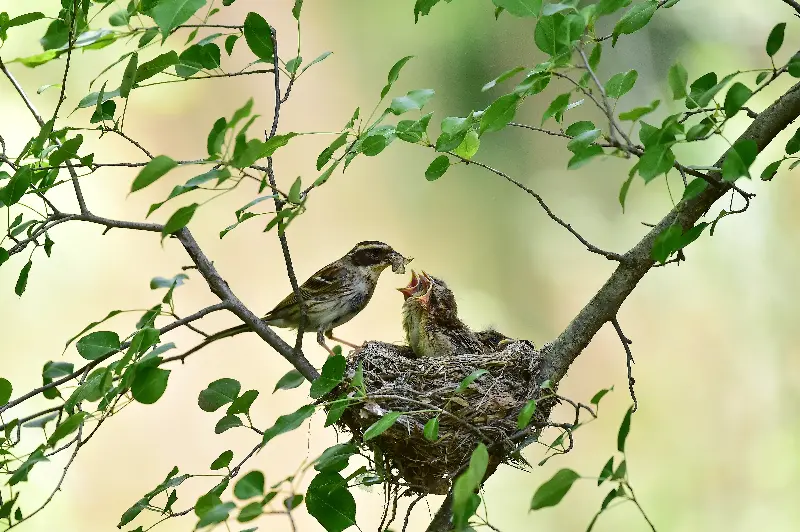
Deep in the heart of forests, beneath the grasslands, and along the banks of rivers, animals are crafting intricate homes that would put even the most skilled human engineers to the test. These architectural marvels are not only impressive feats of construction but also beautiful examples of adaptability and ingenuity. By utilizing their environments and natural instincts, these "wild architects" build shelters that are functional, safe, and astonishingly complex.
THE BEAVER: NORTH AMERICA’S HYDRAULIC ENGINEER
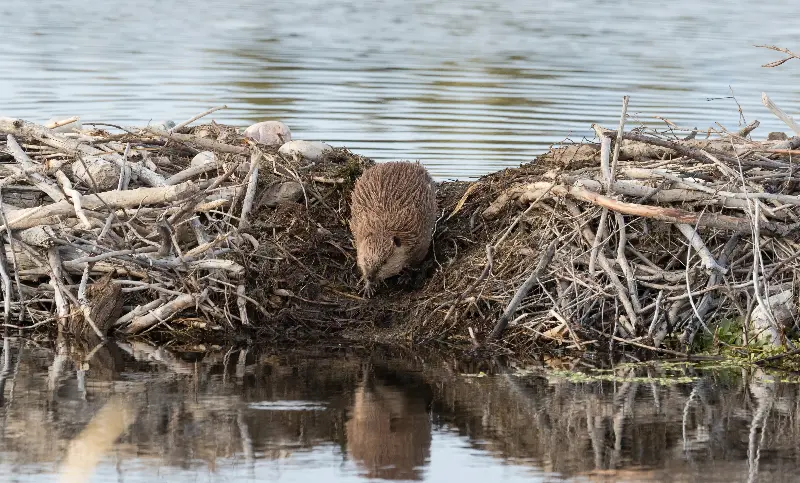
Beavers are perhaps the most iconic animal builders in the world. With tireless jaws and unwavering determination, they gather branches and mud to build dams and lodges that fundamentally alter their surroundings. These structures are far more than simple piles of wood:
- Underwater Entrances: These keep the living quarters remarkably secure against land predators.
- Multi-Zoned Interiors: Lodges feature dry living chambers situated above the water line and a ventilation hole at the top for fresh air.
- Ecosystem Transformation: By creating wetlands, beavers support a massive variety of local flora and fauna, acting as a keystone species.
THE HONEYBEE: PRECISION IN MATHEMATICAL DESIGN
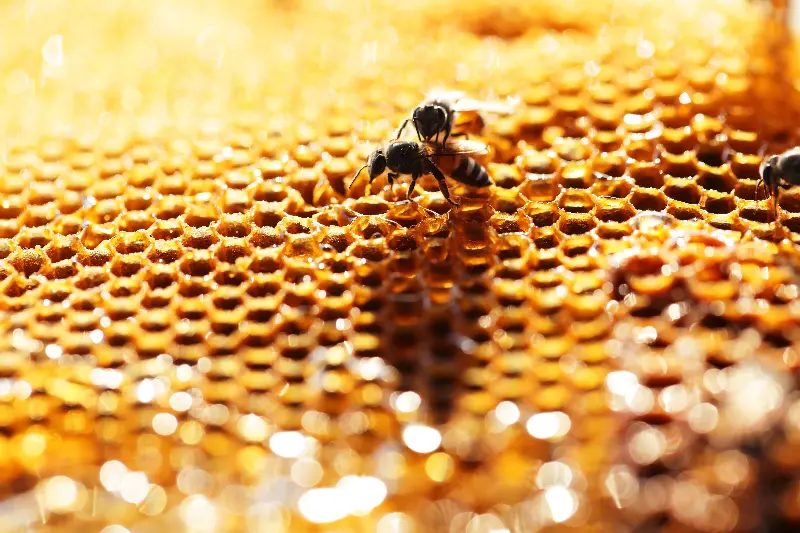
No discussion of animal architecture is complete without the honeybee. The beehive is a wonder of engineering, featuring thousands of perfectly hexagonal cells constructed from wax. This six-sided shape is a mathematical masterpiece; the hexagon uses the least amount of material to hold the most weight, minimizing the metabolic cost of wax production. Inside, these honeycomb structures serve as:
- Storage: Holding honey and pollen for the colony.
- Nurseries: Cradling young bees as they develop.
- Communication Hubs: Allowing for efficient movement and heat regulation throughout the hive.
THE SOCIABLE WEAVER: APARTMENT-STYLE COMMUNAL LIVING
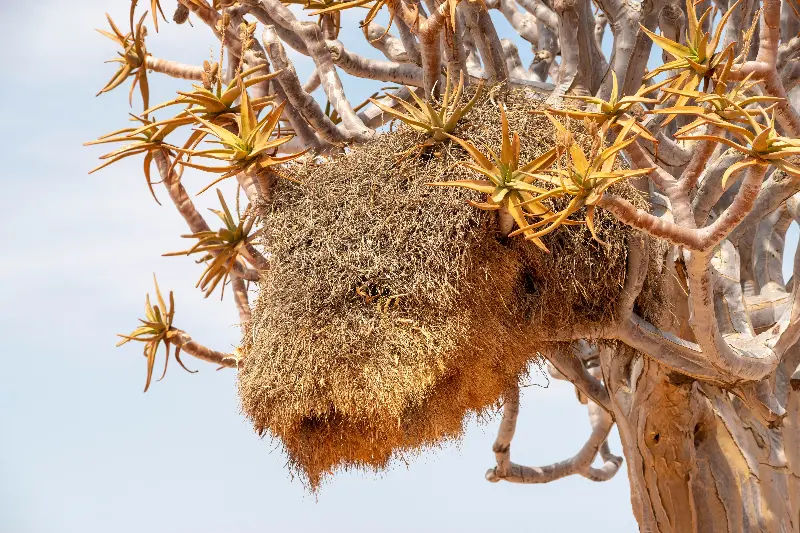
In the arid regions of Southern Africa, the Sociable Weaver constructs what are considered the largest communal nests on Earth. These massive, hay-bale-like structures can house hundreds of birds in individual nesting chambers, each accessed through separate entrances.
These nests are a perfect example of climate-adaptive design. The thick thatch provides such high thermal mass that the interior stays cool during scorching days and retains life-saving warmth during freezing desert nights.
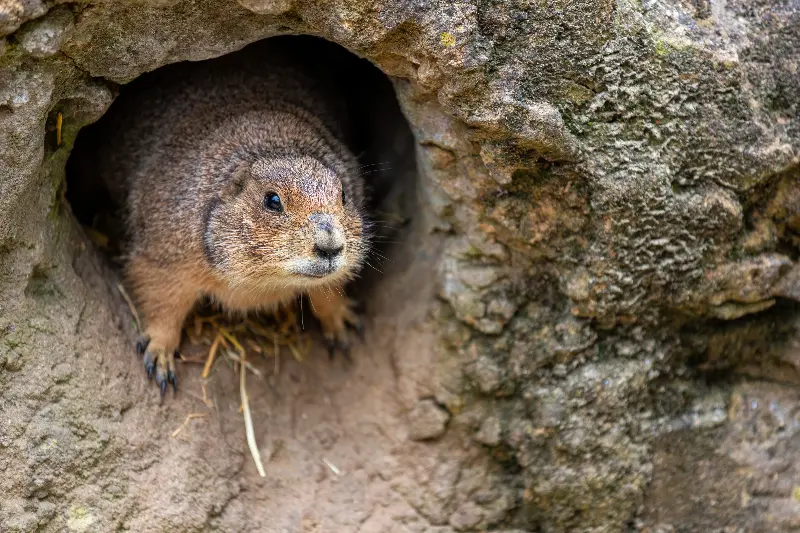
THE PRAIRIE DOG: UNDERGROUND URBAN PLANNERS
Across the American West, Prairie Dogs create sprawling underground colonies known as "towns". These are not just simple holes in the ground; they are highly organized urban environments that can stretch for miles. Their burrows are precision-engineered to include:
- Zoned Chambers: Separate rooms are dedicated to sleeping, nursing young, and even a "bathroom" area.
- Ventilation Mounds: The entrances are capped with volcano-shaped mounds that serve as lookout points and utilize the Bernoulli principle to pull fresh air through the tunnels.
- Flood Protection: The raised mounds also prevent water from entering the living quarters during heavy rainstorms.
THE BOWERBIRD: THE ARTIST OF THE UNDERBRUSH
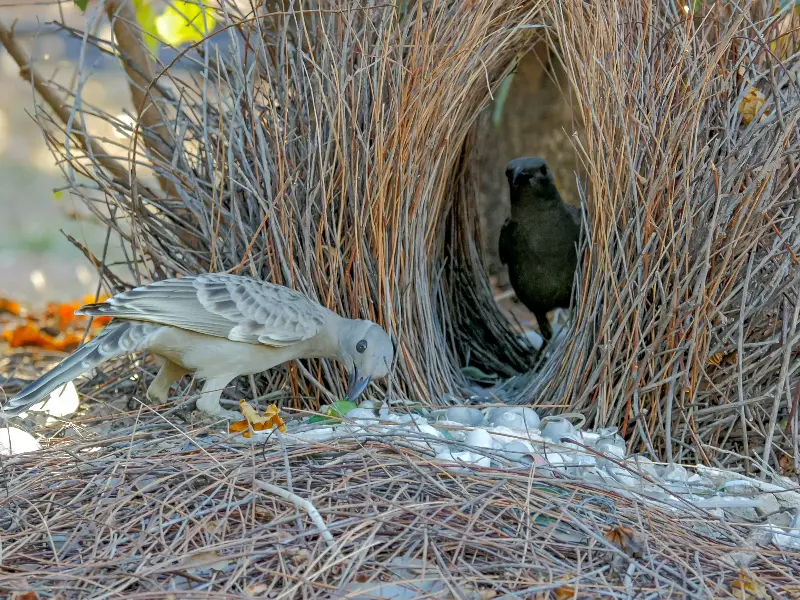
While most animals build for survival, the Bowerbird builds for aesthetics. To attract a mate, the male constructs an elaborate "bower" made of sticks. He then meticulously decorates the area with colorful objects, often sorting them by hue. These aren't nests for eggs; they are high-end showrooms designed to display the builder's fitness and creativity.
BUILT FOR SURVIVAL
From the hydraulic engineering of the beaver to the underground cities of the prairie dog, these masterpieces prove that nature’s architects are specialists at problem-solving. These structures do more than just protect; they inspire a deep respect for the ingenuity found in every corner of the wild.