


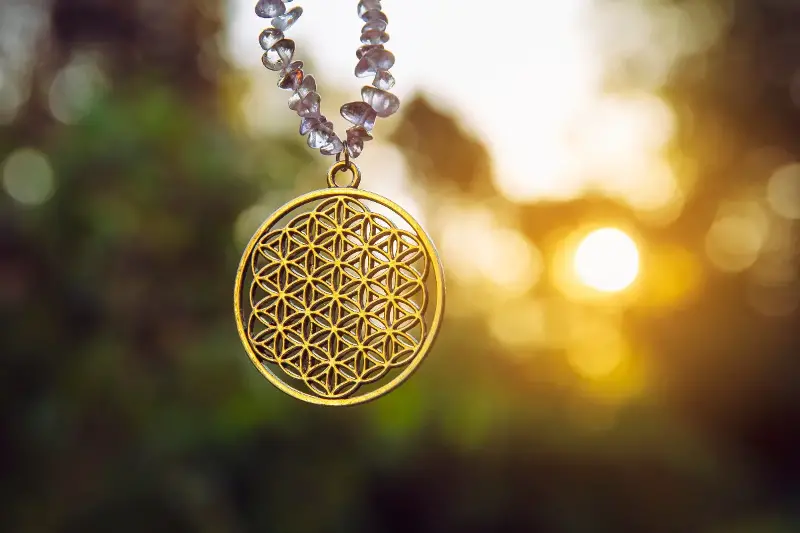
The Flower of Life is not just a beautiful symbol—it is an intricate geometric wonder made up of evenly spaced, overlapping circles. Arranged in a flower-like pattern with six-fold symmetry, it often appears like a blossoming mandala. Far beyond its aesthetic appeal, the Flower of Life is considered one of the most ancient and universal symbols known to humanity. It’s been discovered in temples, manuscripts, and art from civilizations across the globe, including Egypt, India, Turkey, Israel, and even medieval Europe. What makes it so captivating is the fact that, wherever we look, its appearance transcends time, place, and culture.
From pyramids to cathedrals: The symbol’s cross-cultural footprint
While you might spot the Flower of Life today on jewelry, yoga mats, and artwork, its historical significance is truly profound. Traces have been found on the walls of the Osirion temple in Abydos, Egypt, where some suggest it may have been etched over 6,000 years ago. In ancient China, its patterns decorate sacred sites and pottery. Leonardo da Vinci famously studied the geometry behind the symbol, believing it held the secrets of the universe, including the mathematical proportions of light, sound, and living organisms. In Christian, Jewish, Islamic, and various indigenous art forms, the Flower of Life’s woven circles are thought to symbolize the interconnectedness of all life and creation.
Decode the design: Hidden geometry, lost meanings
Look closer, and the Flower of Life reveals an entire world within its buds. Its mathematical precision fascinates scholars and spiritual seekers alike. Here are some secrets locked in its petals:
- Seed of life: The innermost part—seven circles forming a simple flower—represents the seven days of creation in Judeo-Christian tradition.
- Vesica piscis: This almond shape is formed when two circles overlap and is seen as a gateway to creation and consciousness.
- Metatron’s cube: Hidden inside is a complex figure made from connecting points of the circles, representing the building blocks of matter.
Across cultures, the structure often links to sacred geometry—the study of mathematically significant shapes that permeate nature, from nautilus shells to snowflakes and sunflowers. Modern scientists and mathematicians note the recurrence of the Flower of Life’s pattern in microscopic cells and galactic formations alike, leading to ongoing debates: is this symbol just human artistry, or is it evidence of a “cosmic code”?
Why the Flower of Life still stirs the soul
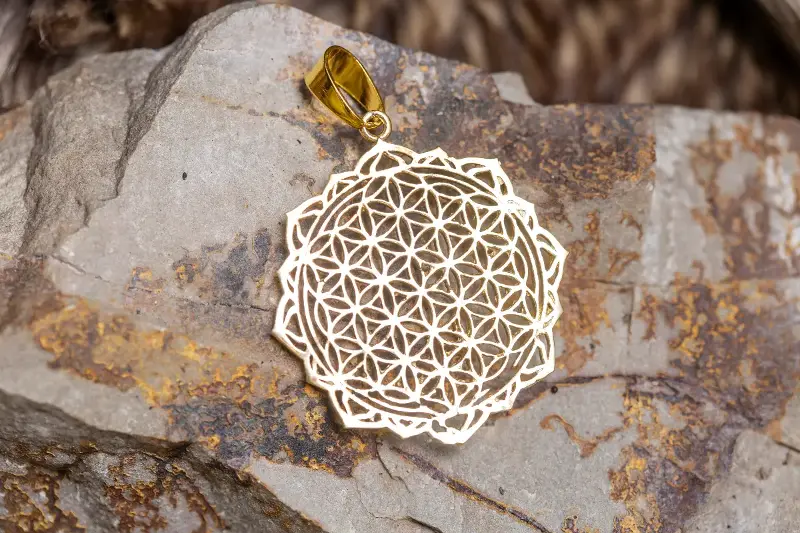
The enduring appeal of the Flower of Life goes beyond its roots in ancient spirituality. Today, it inspires people seeking harmony, balance, and unity. Some believe its pattern holds meditative and healing powers, helping focus the mind and connect with deeper purpose. Artists find limitless creativity in its form; mathematicians marvel at its symmetry; spiritual practitioners see it as a portal to understanding the universe’s mysteries. If you’re looking for a simple way to engage, try drawing it yourself or meditating on it—many report a sense of calm or revelation.
Invitation to wonder: What might the Flower of Life teach us next?
This extraordinary symbol continues to spark questions, re-imaginations, and discoveries worldwide. Is it merely a relic of lost civilizations, or does it point to something fundamental within us all—an eternal pattern echoing throughout nature and the cosmos? Exploring its geometry and legacy may open new perspectives on both science and spirit. Perhaps the real magic lies in its ability to awaken curiosity, reminding each generation to look deeper at the patterns weaving their own lives together. Where will your journey with the Flower of Life take you?