


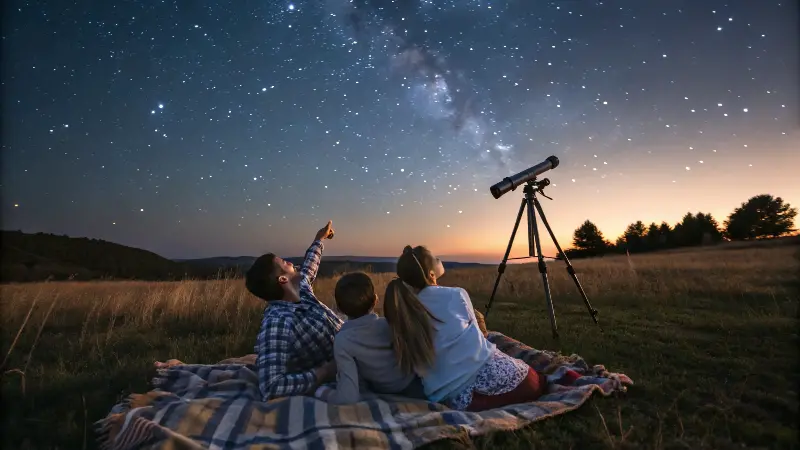
There’s something magical about standing beneath a vast, star-filled sky—looking up to see not just points of light, but ancient stories and distant worlds. Stargazing is more than an activity; it’s a ticket to the universe, right from your own backyard. If you’ve ever wondered what it takes to get started, you’ll be delighted at how simple and rewarding it can be.
WHY STARGAZING CAPTIVATES US
The night sky has fascinated humans since the dawn of civilization. Today, stargazing remains a powerful way to unwind and ignite curiosity. Scientific research even suggests that observing the stars can:
- Reduce Stress: The sheer scale of the cosmos provides a calming perspective.
- Inspire Creativity: Wonders like nebulae and galaxies spark the imagination.
- Deepen Wonder: It connects us to the universe on a deeply personal level.
ESSENTIALS BEFORE YOU BEGIN
Great stargazing starts with preparation. Your primary goal is to find darkness and clarity.
- Location: Scout a spot as far from city lights as possible. Check an online light pollution map to find the darkest sky within reach.
- Timing: The moon is beautiful, but a full moon outshines fainter stars. Aim for the New Moon phase for the deepest darkness.
- Events: Plan your outing around major events like the Perseids (August) or Geminids (December) meteor showers.
- Weather: Look for low humidity and clear skies. Apps like Clear Outside can help you time your session perfectly.
WHAT YOU NEED (AND WHAT YOU DON’T)
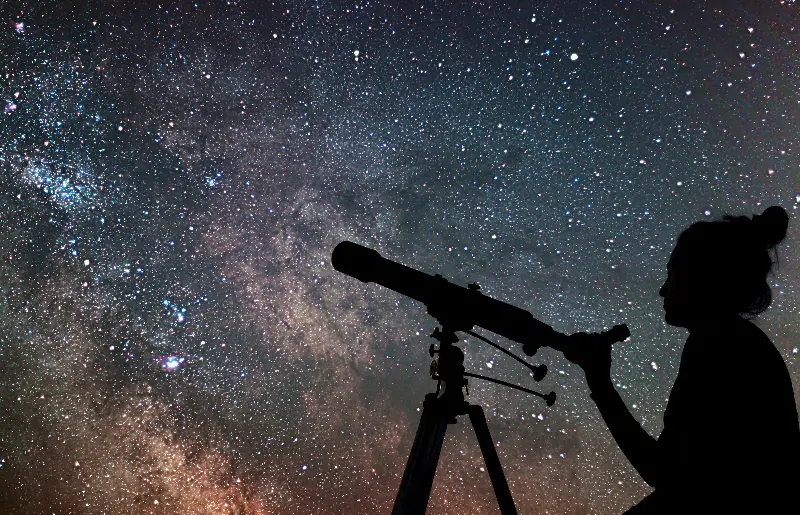
For beginners, less is more. You do not need an expensive telescope to have an unforgettable experience.
The Basics:
- Your Eyes: Allow 20–30 minutes for your eyes to adjust to the dark.
- Red Light: Use a red-filtered flashlight to preserve your night vision.
- Comfort: A folding chair and a warm blanket are essential, as temperatures drop quickly at night.
- Binoculars: A pair of 7x50 or 10x50 binoculars is perfect for spotting moon craters or Jupiter’s moons.
The Tech: Use a stargazing app like Stellarium or SkySafari to identify objects. Be sure to set the app to "Night Mode" to keep the screen from blinding you.
FINDING YOUR WAY AROUND THE SKY
Every journey begins with orientation. The easiest way to start is by learning the brightest seasonal constellations.
- The North Star: In the Northern Hemisphere, find the Big Dipper and use it as a pointer to locate Polaris.
- Winter Staples: Look for Orion, easily identified by the three bright stars in his belt.
- Summer Highlights: Locate the Summer Triangle, formed by the bright stars Vega, Altair, and Deneb.
- Star Hopping: Use these famous markers as "stepping stones" to find more elusive targets like the Andromeda Galaxy.

FUN FACTS TO INSPIRE YOUR NIGHT
The scale of what you are seeing is truly mind-blowing:
- Time Travel: Light from the Andromeda Galaxy has traveled 2.5 million years to reach your eyes tonight.
- Binary Stars: More than half the stars you see are actually binary systems, where two stars orbit each other.
- Atmospheric Shimmer: Stars don’t actually "twinkle"; that effect is caused by Earth’s atmosphere wobbling the light.
SHARING THE COSMOS
Stargazing is even more memorable when shared. Invite friends or family, bring a thermos of hot chocolate, and see who can spot the International Space Station zipping by at 17,500 miles per hour.
Whether you are tracing ancient myths or just enjoying the peace of a silent night, your first steps under the stars will stay with you. Start simple, stay curious, and let the universe surprise you. There’s a whole sky waiting—no matter where you are.