


In fact, simply replacing rice or white starches with sweet potatoes doesn't guarantee weight loss. The basic principle of weight loss is a calorie deficit. This means that no food will automatically cause weight loss if your total daily calorie intake remains high, according to the health website Healthline (USA).
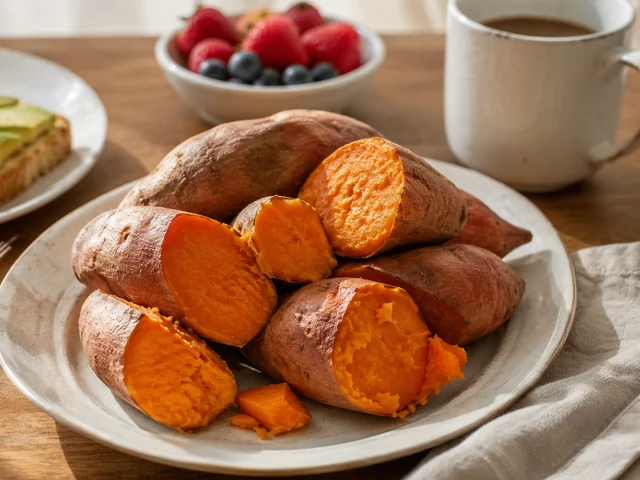
Although sweet potatoes are a healthy food, eating too much can still lead to excess calories and weight gain.
PHOTO: N. Quy created using AI
Total daily calorie intake
100 grams of boiled sweet potatoes contain approximately 80-90 calories. Meanwhile, 100 grams of white rice contains about 130-150 calories. Therefore, replacing some rice with sweet potatoes can reduce calorie intake. However, if you then consume snacks, pastries, or sugary drinks, your total daily calorie intake may still exceed your needs.



This is why two people eating sweet potatoes might have different results. The person who maintains a reasonable calorie intake will lose weight, while the person who eats too much will still gain weight.
How to prepare sweet potatoes
Furthermore, the way sweet potatoes are prepared is also very important. A study published in the Journal of Nutrition and Metabolism showed that the glycemic index of sweet potatoes can vary significantly depending on the cooking method. Boiled sweet potatoes generally have a lower glycemic index than baked sweet potatoes.
Sweet potatoes that are fried, coated in sugar, covered in butter, or combined with condensed milk can contain significantly more calories than boiled or steamed sweet potatoes.
There are several other reasons why you might still gain weight even though you eat sweet potatoes.
One common cause is overeating. Although sweet potatoes are a healthy food, they still provide energy. If eaten in large quantities every day, the accumulated calories can exceed the body's needs.



Lack of physical activity is also a significant factor. If physical activity levels decrease while food intake remains the same or increases, weight can still increase even with a healthy diet.
In addition, age, gender, muscle mass, sleep patterns, and hormonal factors also affect the ability to control weight. Therefore, the same food can have different reactions from person to person, according to Healthline .