


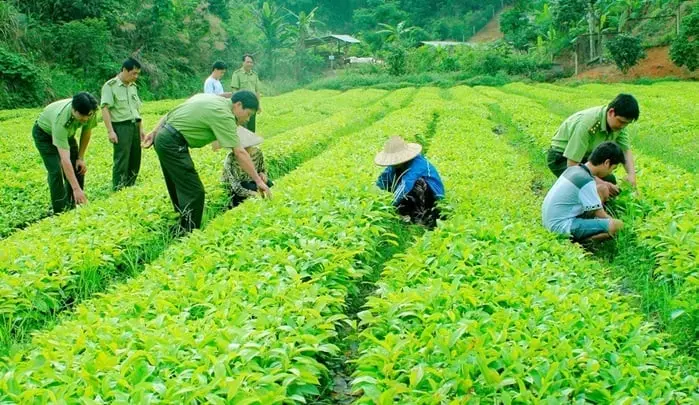
The government has recently issued Decree No. 214/2026/ND-CP on administrative penalties for violations in the fields of crop cultivation, plant protection, and plant quarantine. The decree aims to strengthen the management of the entire chain of activities, from testing, production, and trading of plant varieties to managing planting area codes, protecting plant varieties, and import and export.
Comprehensive sanctions for violations related to plant varieties.
One of the notable points of Decree 214/2026/ND-CP is the establishment of a relatively comprehensive system of sanctions for violations related to plant varieties - a field that plays a decisive role in the productivity, quality, and efficiency of agricultural production.
According to the new regulations, plant variety testing activities are subject to stricter supervision. This is a crucial step in evaluating the characteristics, adaptability, and quality of varieties before they are approved for circulation. The decree stipulates fines of 3-5 million VND for failing to store test results as required and 15-20 million VND for failing to comply with national standards on testing methods.
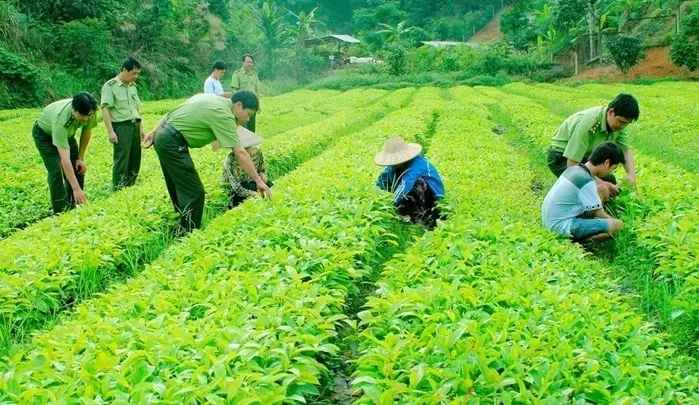
Producing plant varieties that have not been approved for circulation can result in a fine of up to 50 million VND. Photo: MD.
In particular, fraudulent acts that falsify test results will be severely punished. Providing inaccurate results, erasing or altering test documents, or conducting tests on genetically modified plants without the necessary legal conditions may result in fines of up to 40 million VND. Cases where test results are issued without actual testing will be subject to fines of 40-50 million VND.
In addition to fines, the Decree also applies remedial measures such as requiring the cancellation of test results, recalling records and documents, or conducting retesting as prescribed. This shows that the goal of the management agency is not only to handle violations but also to eliminate unreliable test results from the state management system.
Regarding plant breeding activities, the Decree continues to demonstrate a strict management approach right from the input stage. Acts of producing seeds for commercial purposes that do not conform to the approved content or fail to meet the requirements for facilities and equipment will be subject to fines ranging from 10 to 15 million VND.
Notably, the production of plant varieties that have not been approved for circulation or have not been self-declared for circulation will be subject to penalties based on the value of the infringing varieties. Depending on the scale, the fine can reach up to 50 million VND for individuals. In addition, the violating establishment will have its production suspended for 3-6 months and will be forced to destroy all infringing plant varieties.


Besides production activities, the trading of plant seeds is also being strictly regulated. The decree clearly stipulates the penalties for trading seeds that have not been approved for circulation or whose information is inaccurate compared to the approved content. In addition to fines, violating establishments may have their business operations suspended for 1-3 months, be forced to destroy the infringing plant seeds, and return all illegal profits obtained.
In addition, the Decree specifies detailed responsibilities for technical activities such as seed sample storage, seed field inspection, and sampling of propagation materials. Although these are often overlooked steps, they are crucial links in ensuring the quality of plant seeds. Clearly defining penalties for each violation is expected to enhance the professionalism and transparency of the seed production system.
Strengthening the protection of plant variety rights.
Decree 214/2026/ND-CP also contains many regulations aimed at strengthening the protection of intellectual property rights for plant varieties and tightening the management of activities serving exports.
In the context of Vietnam's increasing integration and participation in many new-generation free trade agreements, protecting plant variety rights is becoming a crucial requirement to encourage research, selection, and development of new, high-value varieties.
To protect the legitimate rights and interests of organizations and individuals involved in plant breeding, the Decree stipulates a fine of 20-30 million VND for the act of using plant varieties that have been accepted for protection registration for commercial purposes without fulfilling the compensation obligation as prescribed.
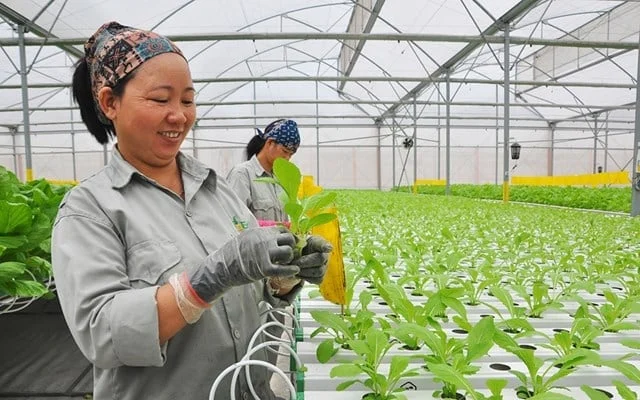
Violations related to the management of growing area codes and packaging facility codes may be subject to fines ranging from 500,000 VND to 20 million VND. Photo: Thanh Duy.
For acts infringing the rights of plant variety protection holders, such as unauthorized propagation, production, sale, export, or import of protected varieties, the penalty can be up to 50 million VND. In addition, the infringing materials will be confiscated, and the offending organization or individual must return all illegal profits obtained from the violation.
Another noteworthy point is the strengthening of management of planting area codes and packaging facility codes – conditions that are becoming increasingly important for agricultural exports.
According to the Decree, violations related to the management of planting area codes and packaging facility codes may be subject to fines ranging from 500,000 VND to 20 million VND. In particular, using planting area codes or packaging facility codes that do not accurately reflect the origin of goods for export is considered a serious offense and may result in the forced destruction of the infringing products.

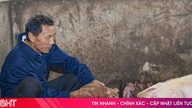

Recent experience has shown that the misuse of planting area codes has significantly affected the reputation of Vietnamese agricultural products in some import markets. The addition of stronger sanctions is expected to contribute to increased transparency in traceability, while also protecting the rights of localities and businesses that strictly comply with regulations.
Regarding the import and export of plant varieties, the Decree also establishes specific measures to prevent the risk of introducing unlicensed varieties into production or circulation on the market. Cases of importing varieties that do not comply with the license or are imported without a license may be fined up to 20 million VND, and will be forced to re-export, remove from Vietnamese territory, or destroy if re-export is not possible.
With its broad scope of regulation and a comprehensive and deterrent system of sanctions, Decree 214/2026/ND-CP is expected to contribute to improving the effectiveness of state management in the fields of crop cultivation, plant protection and quarantine, while creating a transparent and healthy production and business environment, meeting the requirements of modern agricultural development and international integration.
Decree 214/2026/ND-CP stipulates a maximum fine of VND 50 million for individuals in the field of crop cultivation (excluding fertilizers) and VND 100 million in the field of fertilizers. For organizations, the fine is twice the amount applied to individuals committing the same violation.