


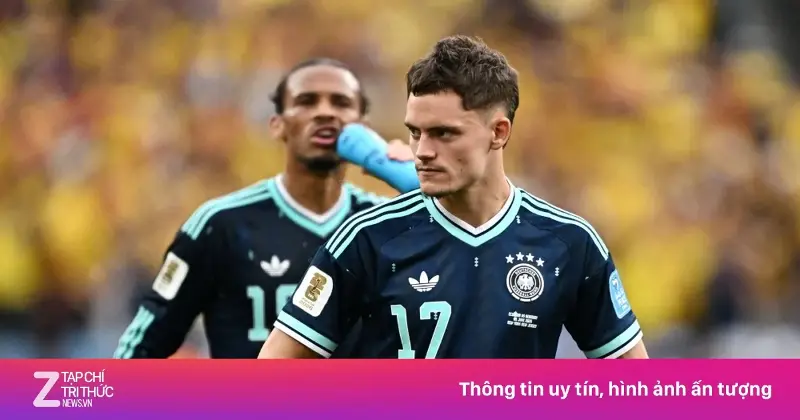
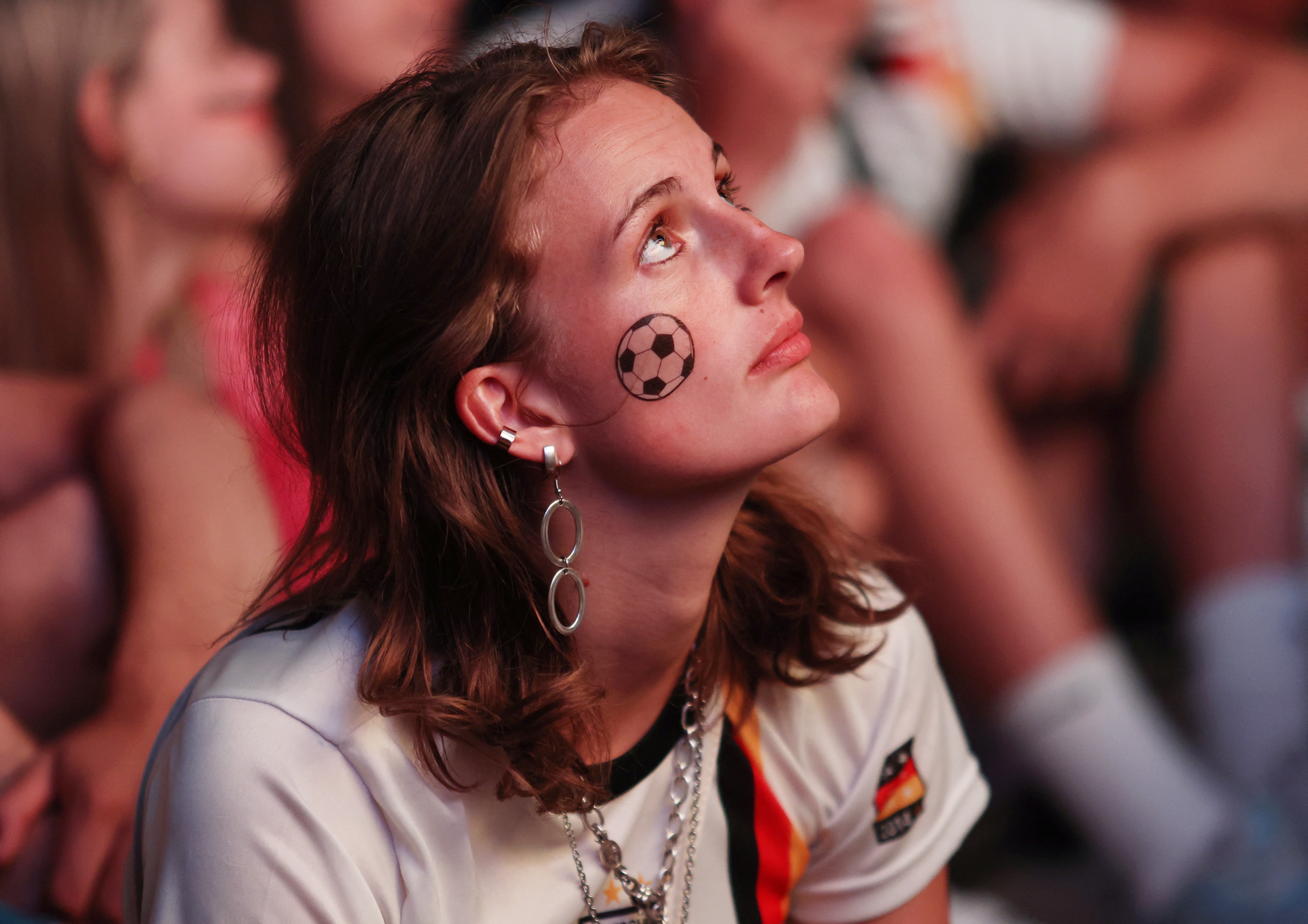
For the first time since the 2014 World Cup, Germany avoided elimination in the group stage. However, German fans can hardly breathe a sigh of relief, because based on what Nagelsmann's team has shown in the last three matches, "Die Mannschaft" could easily be eliminated in the round of 32 and would have almost no chance against a powerful French team if they were lucky enough to reach the round of 16.
Problems and issues
The four-time world champions are facing numerous problems across all three lines. First, let's talk about their fragile defense.
Ahead of the World Cup , coach Nagelsmann surprised the whole of Germany by recalling veteran goalkeeper Manuel Neuer. Throughout the 2025/26 season, Neuer's performance was quite inconsistent, with some brilliant plays followed by other silly goals conceded. The goal that saw Ecuador take a 2-1 lead clearly demonstrated the sluggishness of the 40-year-old star.
In front of Neuer was a completely insecure shield following Nico Schlotterbeck's injury. For the remainder of the World Cup, coach Nagelsmann was forced to rely on center-back Antonio Rüdiger, who also had a very inconsistent season and lacked the accurate long-passing ability of Schlotterbeck. In Germany's 1-2 defeat to Ecuador on June 26th, Rüdiger repeatedly made inaccurate passes or put the two central midfielders in difficult positions, making it easy for them to lose possession.
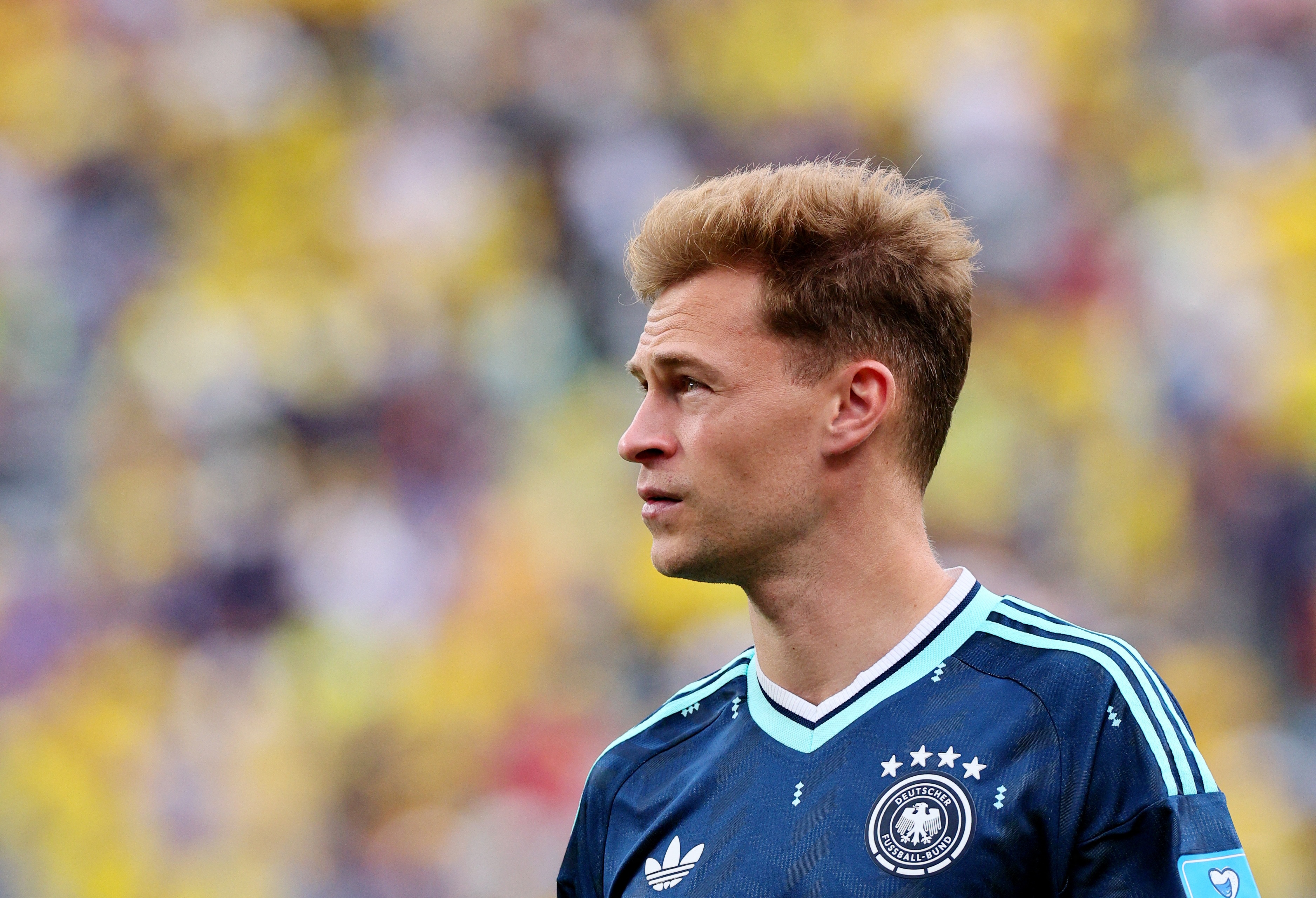
Die Mannschaft progressed, but their lackluster performance in the group stage showed they still have many problems to address.
On the left wing, Nathaniel Brown is a bright discovery for Germany at the 2026 World Cup, but when the 23-year-old is injured, David Raum is not an effective replacement. Raum lacks the intelligent movement and skillful ball control in tight spaces that Brown possesses.
If Brown doesn't recover in time to start the round of 32 match, Germany's left flank will become a major weakness for the opposition to exploit.
The right flank, where Joshua Kimmich is positioned, is also Germany's weak point. The German captain is an outstanding central midfielder, but too slow to cope with the powerful and fast wing forwards.
Just look at how young Yan Diomande easily bypassed Kimmich to cross the ball for his teammate to score in Germany's match against Ivory Coast, and then try to imagine what world-class stars like Kylian Mbappe or Vinicius Jr. would do when facing a Bayern Munich player.
Next is the gap in the midfield. Aleksandar Pavlovic played quite consistently last season at Bayern Munich alongside Kimmich, but he's not the right partner for Felix Nmecha. The Borussia Dortmund player is a pure "box-to-box" midfielder, both intercepting passes and pressing forward towards the opponent's goal.
Therefore, the burden of controlling the tempo of the game and initiating attacks falls on Pavlovic's shoulders, but he lacks the necessary skill set to fulfill that task. The 22-year-old midfielder is unable to make consistent long passes and through passes, and also lacks the ability to escape pressing.
In the Germany-Ivory Coast match, facing tall and strong African players, Pavlovic repeatedly lost possession, putting the German defense on the defensive. He only won one one-on-one duel before being substituted. Pavlovic's performance did not improve in the next match, when the Ecuadorian players employed an aggressive pressing strategy.
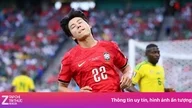
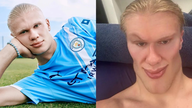
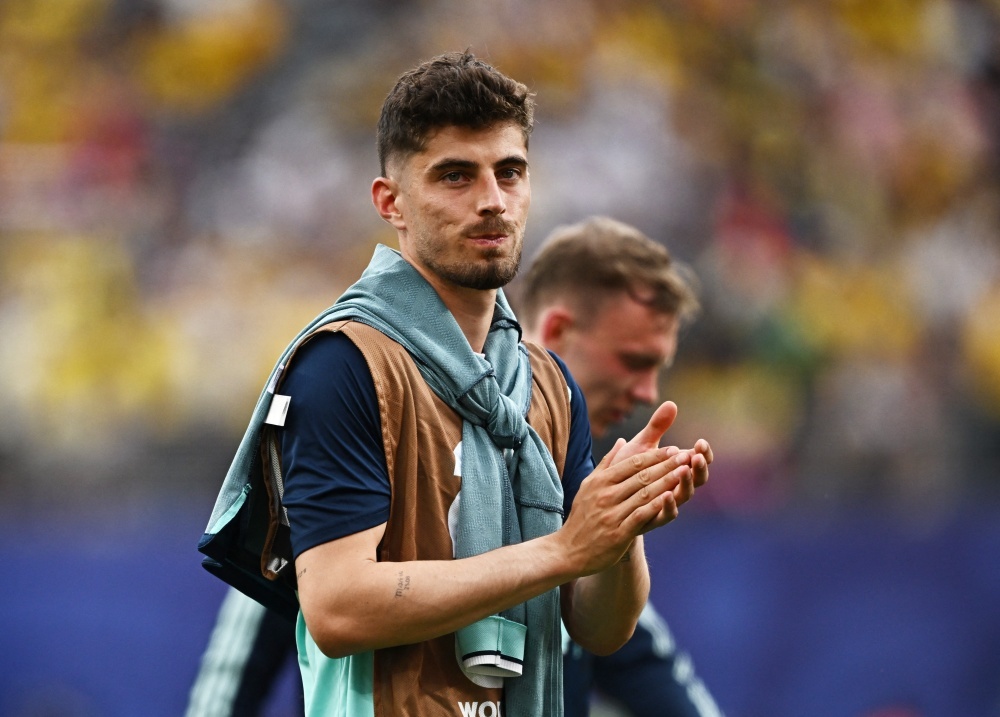
From Neuer and Kimmich to Havertz and Sane, the German national team is revealing too many weaknesses ahead of the knockout round.
Germany's biggest and most serious problem lies in their attack. From Hansi Flick to Nagelsmann, German coaches seem obsessed with deploying Kai Havertz as a central striker.
In fact, in 2022, the German national team didn't play badly at all, creating at least four clear-cut scoring opportunities in each match, but failed to capitalize on them and only scored one goal in their loss to Japan and draw with Spain. Havertz started in both matches but didn't make any impression. Only when a true striker like Niclas Füllkrug came on did Germany find a way to put the ball in the net.
Havertz is a player who moves widely, is intelligent, and links up well with the midfield. However, the Arsenal player lacks the necessary killer instinct in the penalty area to move into advantageous positions and capitalize on scoring opportunities.
With Havertz frequently dropping deep to link up with his teammates, the German team consistently lacks a reliable "destination" in the opponent's penalty area.
The lesson was clear, but Nagelsmann still followed in Flick's footsteps by placing complete faith in Havertz, even though Dennis Undav always played exceptionally well whenever he came on and consistently scored goals. What else does Undav need to do to earn a starting place from coach Nagelsmann?
German media and fans had been asking this question months before the World Cup, and public pressure mounted on Nagelsmann after Undav scored three goals in the first two matches of the 2026 World Cup.
But the German national team coach still refused to change. Not only did Nagelsmann not give Undav a starting place, but he also completely ignored Nick Woltemade. The Newcastle striker's form declined in the second half of the 2025/26 season, but he played very well for Germany in last year's World Cup qualifiers.
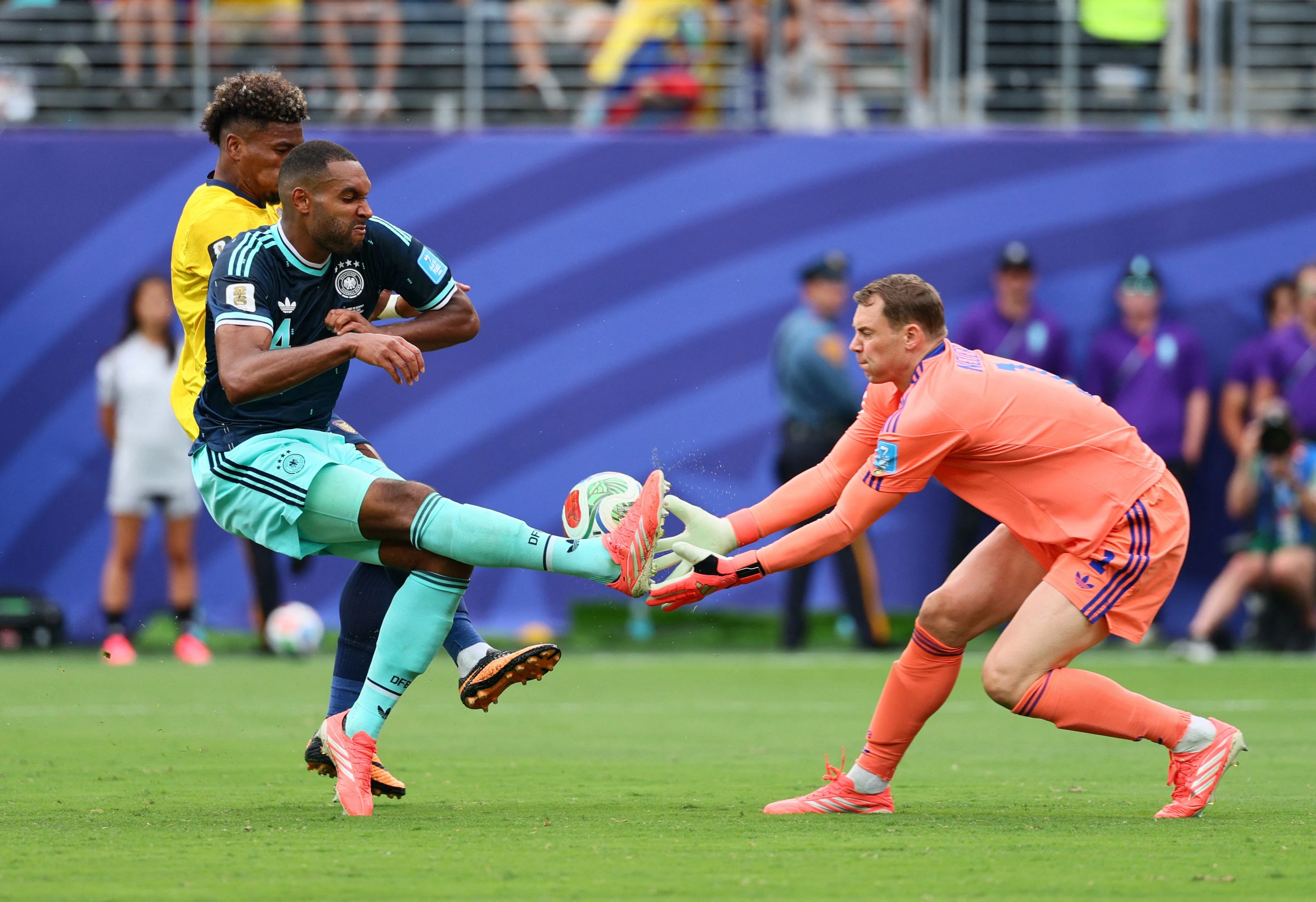
Can a German team lacking consistency, sharpness, and explosiveness go far at the 2026 World Cup?
Standing at 1.98m tall, Woltemade possesses excellent aerial ability and is also skillful enough with his feet to effectively link up with his teammates in attack. Nagelsmann seems to be wasting a valuable asset due to his bias.
Below Havertz, two young stars, Florian Wirtz and Jamal Musiala, are also causing much disappointment with their lackluster performances against Ivory Coast and Ecuador. They are the current and future hopes of German football, but have completely failed to live up to expectations so far.
For Musiala, old injuries remain a haunting issue. As for Wirtz, being pushed to the left wing as a pure, skillful but not very fast number 10 has significantly limited his ability to organize attacks.
Ultimately, the biggest "black hole" of the German team, as described by many German fans, is Leroy Sane. Despite scoring in Germany's match against Ecuador, Sane remains the biggest disappointment and the worst-performing player.
Sane possesses speed and good technique, but he completely lacks confidence after a disappointing season at Galatasaray. Even against a weak team like Curacao, Sane easily lost possession after a few dribbles and frequently made inaccurate passes. Sane's average rating in the first two matches was 6.61, a number far too low compared to his attacking teammates.



With Sane in the team, Germany has almost no ability to penetrate down the right flank. As a result, "Die Mannschaft's" playing style completely lacks balance and variety.
It's unfortunate that with the injury to prodigy Lennart Karl, coach Nagelsmann didn't call up a strong, fast, and in-form player like Said El Mala, who scored 13 goals and provided 5 assists in the 2025/26 season for the smaller club FC Köln. Instead, he placed his trust in Sane, despite having publicly stated that he only considered a player's club performance.
Nagelsmann's mistake
It's also impossible to ignore the role of coach Nagelsmann in criticizing Germany's performance in the group stage. He appeared too conservative and inconsistent in his personnel choices, resulting in a German team that wasn't at its optimal quality, and he also refused to correct his mistakes when he placed his trust in the wrong players.
Germany's tactics, overly reliant on ball control, sequential passing, and lacking quick counter-attacks, made them one-dimensional and monotonous. Ivory Coast and Ecuador showed the world that beating Germany isn't difficult at all. The formula is simple: disciplined defense, limiting the space of Musiala and Wirtz, and quick counter-attacks by exploiting opportunities to exploit their high defensive line. That's enough.
Unlike previous World Cups, the German national team is not considered a favorite to win the 2026 tournament. To date, they have achieved their minimum goal of advancing beyond the group stage. However, with so many weaknesses in both personnel and tactics, the round of 16 will likely be the final leg of the journey for the team that once struck fear into the hearts of the world.