



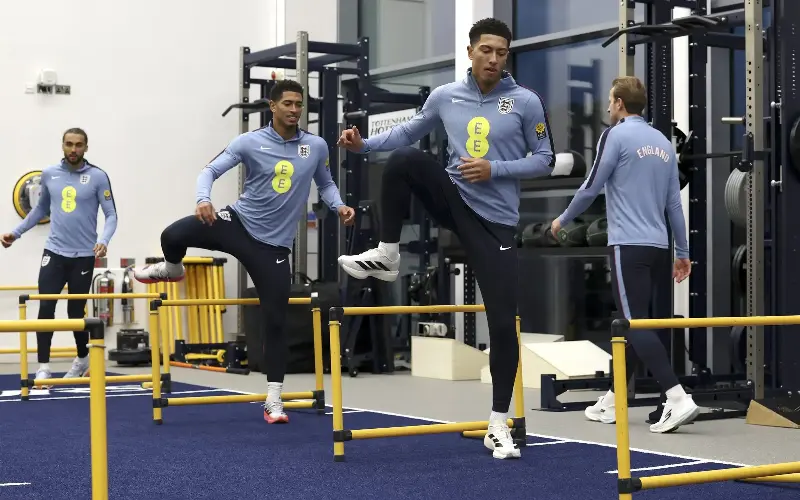
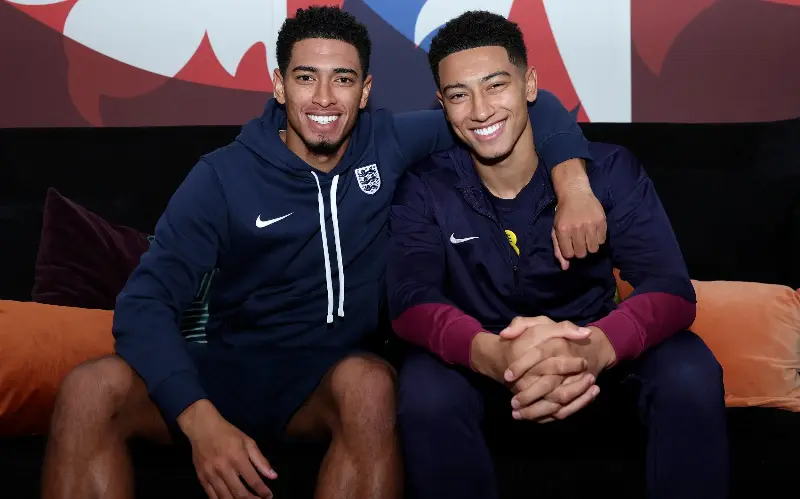
Ordinarily, a player winning an England call-up aged 21 would be the cause of great excitement. But in the case of Jobe Bellingham, expectations are a little tempered: for all his qualities, Jobe is perennially compared with his elder brother Jude.
Few expect Jobe to be better than his older brother. While Jobe will make his England debut just two months after turning 21, Jude’s first cap came aged 17. By the time that he was Jobe’s age now, Jude had already thrived for England in two international tournaments. But Jobe has one major sporting advantage: he is the younger sibling.
Younger siblings have significantly more chance of becoming elite athletes. If two siblings both become professional, the little sibling is significantly more likely to enjoy the better career.
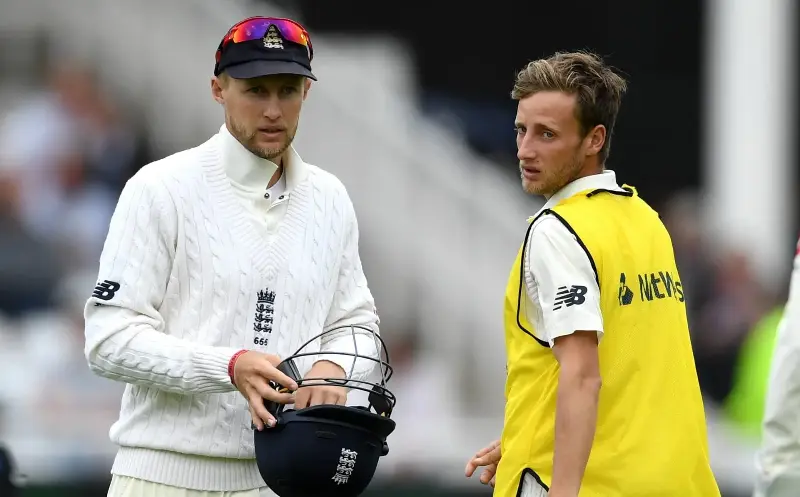
Naturally, there are exceptions. Joe Root and Gary Neville, for instance, both enjoyed more successful professional careers than their younger brothers. But the phenomenon of the little sibling effect holds true across different sports and different countries.
If you have a younger sibling, they are probably better at sport than you. In about two out of three cases when a pair of siblings both play the same sport professionally, the younger one is more successful.
The little sibling effect was demonstrated by a study of male and female athletes in 33 different sports in Australia and Canada. The study compared elite athletes, who reached senior international competition, including the Olympic Games, with a control group of non-elite athletes.
On average, both groups had the same number of siblings. But the elite athletes had an average of 1.04 older siblings; non-elite athletes had only 0.61 older siblings.
The trend has also been found in baseball. Among 700 pairs of brothers to both play Major League Baseball, the younger sibling had a better batting average in 70 per cent of cases, a study by Frank Sulloway and Richard Zweigenhaf showed. Younger siblings also generally enjoy significantly longer careers.
More than 60 pairs of brothers and half-brothers have played Test cricket. In about two-thirds of cases the younger brother enjoyed the superior career, Scyld Berry showed in Cricket: The Game of Life.
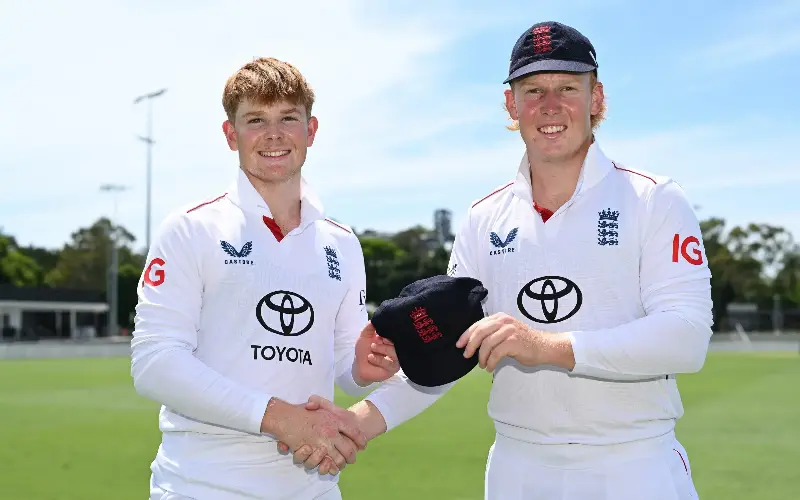
Sam and Tom Curran are the latest example of this trend: Tom is highly unlikely to add to his two Tests; Sam has 24 caps, and is now considered the closest to a replacement for Ben Stokes in the Test team. Thomas Rew, the younger brother of James, is just 18 but is already considered one of the most precocious batsmen in the world. Rew jnr is part of England’s Twenty20 squad to tour Australia next month.
In football, younger siblings have an advantage, too. Lionel Messi has two older brothers (and a younger sister); Cristiano Ronaldo is the youngest of four children. Harry Kane, the new Ballon d’Or winner, has one older brother, who works as his agent.
Should Jobe be picked against Croatia on Thursday, the Bellinghams will become the 22nd pair of brothers to represent England. While the majority of this group played in the 19th century, reflecting how football was less prominent then, the list includes the brothers who played together in England’s 1966 World Cup victory. Bobby Charlton was 2½ years younger than Jack and earned 71 more England caps.
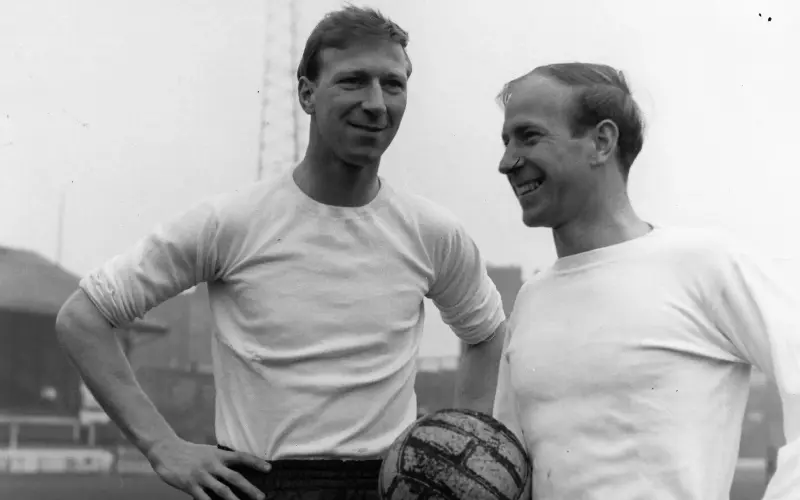
For younger siblings, their older brothers often act as their catalyst to enter the sport. The youngest tend to be exposed to sport at an earlier age, giving them more chance to develop their athleticism.
The urge to beat their older sibling also harnesses competitiveness. “When you come to blows with someone you absolutely love, that’s igniting every fire within you,” Michael Jordan recalled of his famous backyard basketball tussles with his older brother. “I always felt like I was fighting Larry for my father’s attention.”
Just as was the case for the Charlton brothers on the streets of Ashington, the younger sibling must compensate for their lack of physical power. “Playing up” – that is, playing with older children – has been shown to accelerate skill acquisition.
“Playing with older siblings could lead to superior skill development due to the increased challenge,” explains Joe Baker, a sports scientist from the University of Toronto. The difficulty of playing against an older sibling can also drive the younger child to develop creativity, tactical sense and mental strength.
Consider the childhood games between the Williams sisters on the public tennis courts in Compton, California. Fifteen months younger than Venus, Serena was forced to find ways to overcome her older sister’s greater strength on the court.
Naturally, Serena mostly lost when the two played as children. But, paradoxically, these defeats helped her develop at a faster rate. “I’ve learnt a lot from watching Venus,” Serena said in 1998.

The optimal challenge point is the sweet spot at which athletes learn skills at the fastest rate. The concept, which was developed by scientists Mark Guadagnoli and Tim Lee, explains that athletes learn far more when they fail regularly.
When they have physically matured, little siblings no longer have these physical disadvantages. But they retain their advantages in other areas, helping them perform better than their big brothers or sisters.
Older siblings give younger siblings a constant point of comparison, and a source of learning. Younger siblings can learn from their older siblings’ successes in the same sport – and their failures, too. Andy Murray, who is 15 months younger than Jamie, said that the Lawn Tennis Association “ruined” his brother as a teenager. Jamie’s experiences led their mother, Judy, to send Andy to train at the Sánchez-Casal Academy in Barcelona when he was 15.
Jobe might not go on to emulate his big brother. But, like the younger Murray boy and Williams girl, he has also learnt from his sporting sibling – emulating Jude first in joining Birmingham City’s academy, and then by signing for Borussia Dortmund. For Jobe, as with many younger siblings before him, there is no motivation quite like following – and eventually even beating – big brother.