


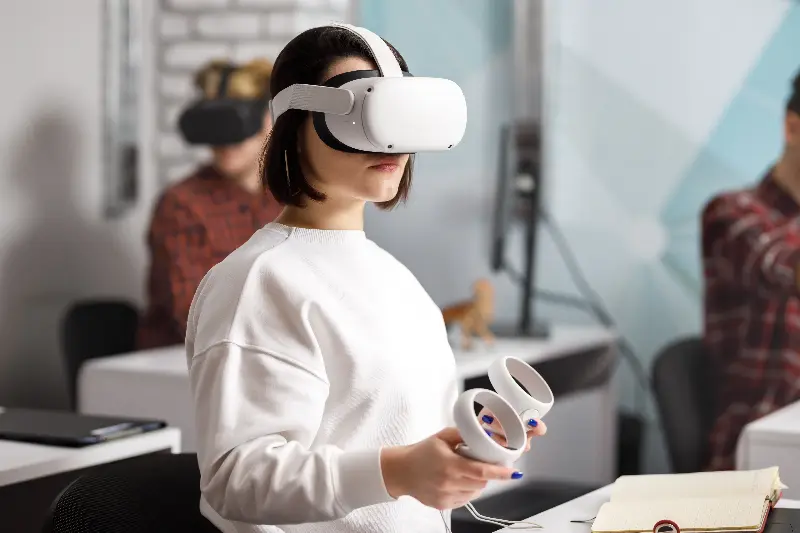
Virtual reality (VR) is no longer just the stuff of futuristic films or high-tech gaming arenas. Over the past decade, it has steadily made its way into classrooms, museums, and research labs, transforming the way students and lifelong learners experience education. Instead of passively absorbing information, people can now step inside a beating human heart, travel back to walk among the dinosaurs, or experiment with chemical reactions without the risk.
THE SCIENCE LAB REIMAGINED
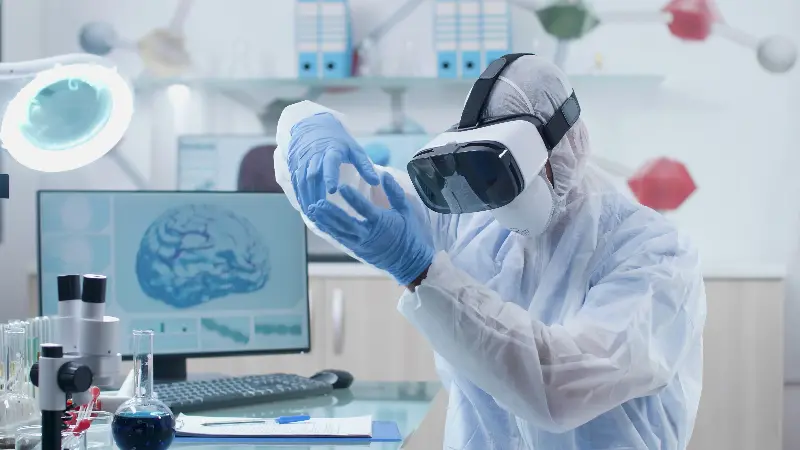
Picture a high school student donning a headset and suddenly finding themselves inside a virtual laboratory. VR labs are making scientific experimentation safer, more accessible, and far more captivating.
- Unlimited Resources: Students are no longer limited by the budget of their school; everyone can access elaborate experiments that might otherwise be impossible.
- Safe Exploration: The ability to make mistakes in a consequence-free environment encourages risk-taking and curiosity.
- Retention Rates: Research from Stanford University suggests that students learning via VR simulations retain knowledge up to 30% better than those taught solely through textbooks.
By making difficult concepts tangible and memorable, VR offers more than just information—it provides experiences.
WALKING THROUGH HISTORY
With VR, history lessons are no longer confined to static images and timelines. Platforms like TimeLooper and Google Expeditions allow users to journey to pivotal moments in history as if they were actually there.
- Interactive Avatars: Some programs harness AI to let students hold "conversations" with historical figures.
- Empathy and Understanding: When students "walk" through the trenches of World War I or witness landmark civil rights speeches up close, history comes alive.
- Active Participation: This deeper engagement turns passive note-takers into active participants, fostering a long-lasting connection with the subject matter.
BREAKING DOWN BARRIERS IN LEARNING
VR fundamentally changes who can access education by shrinking traditional barriers such as distance, cost, and physical accessibility.
- Virtual Field Trips: Students in rural or underserved areas can visit world-class museums, coral reefs, or even the surface of Mars.
- Inclusion: Learners with disabilities often find VR tools more adaptable. Features like adjustable fonts, color contrast modes, and closed captioning are becoming standard.
- Global Classrooms: Platforms such as ENGAGE and ClassVR build virtual environments where students and teachers from around the globe interact seamlessly regardless of their physical locations.
LESSONS BEYOND THE CLASSROOM
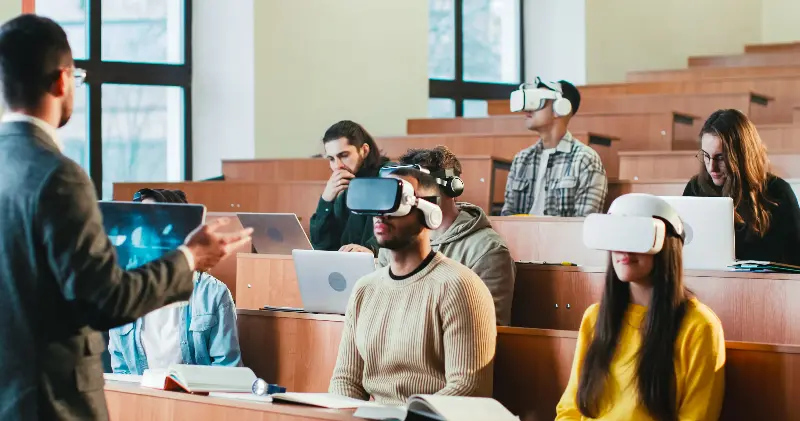
The applications of VR extend far beyond traditional school subjects. It is becoming a vital tool for professional training and cultural preservation:
- Medical Training: Students practice complex surgeries in highly realistic, risk-free simulations.
- Aviation: Aspiring pilots earn their wings in flight simulations that replicate real-world turbulence and weather.
- Soft Skills: Teamwork, communication, and leadership are honed in virtual group challenges.
- Museums: Institutions like The Louvre and the Smithsonian offer virtual tours, ensuring art remains accessible to those who may never have the chance to travel abroad.
THE FUTURE CLASSROOM
As VR headsets become more affordable, the next era of virtual education could feature fully interactive curricula and adaptive AI tutors. Imagine students from different continents collaborating in a simulated environment to solve real-world global challenges in real-time.
Of course, challenges like digital equity and teacher training remain. However, as technology advances, the gap between what is possible and what is available is closing fast. VR is quickly redefining how people learn and connect, leveling the educational playing field and giving every learner the opportunity to explore like never before.