


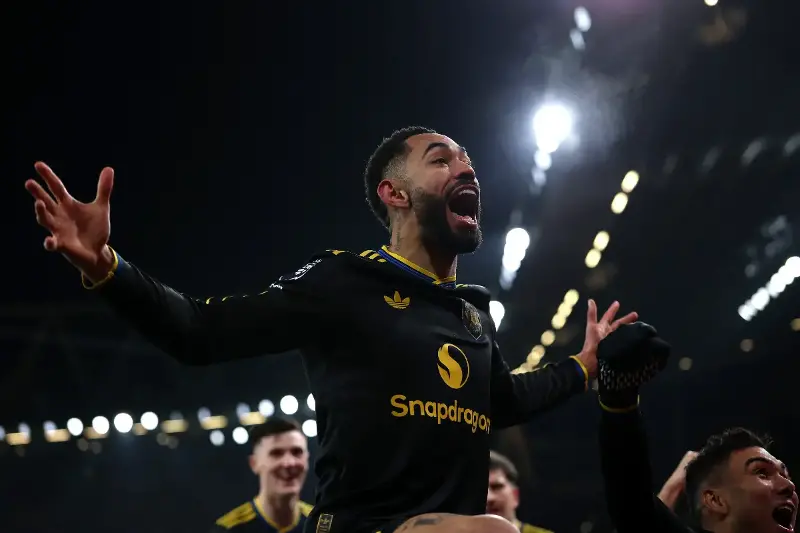
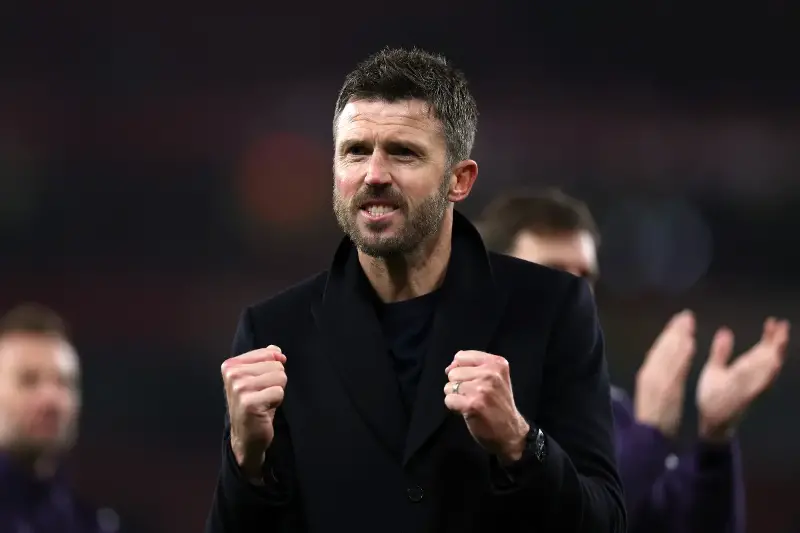
Michael Carrick made a bold call by sticking with the exact starting XI that triumphed over Manchester City. This meant that rising star Kobbie Mainoo retained his spot in midfield under Carrick’s fresh leadership. On the other side of the pitch, Arsenal boss Mikel Arteta chose to shake things up following their midweek Champions League win over Inter. Key midfielders Declan Rice and Martin Ødegaard reclaimed their starting berths, pushing Merino and Eze to the bench, while at the back, Gabriel and Hincapie stepped in, replacing Mosquera and Lewis-Skelly.
Early Arsenal pressure and United fast response
From the sound of the referee’s whistle, Arsenal set the tempo, swarming forward and pinning United’s defense deep. The home side’s relentless pressure paid off in the 29th minute. Bukayo Saka slipped the ball to Ødegaard, whose strike ricocheted off Timber and then Lisandro Martínez, wrong-footing goalkeeper Lammens. It was an own-goal by committee—an untidy but effective way to open the scoring. Arsenal looked in control, brimming with confidence, and the Emirates crowed with belief. It seemed, perhaps, like the first step in another routine home win.
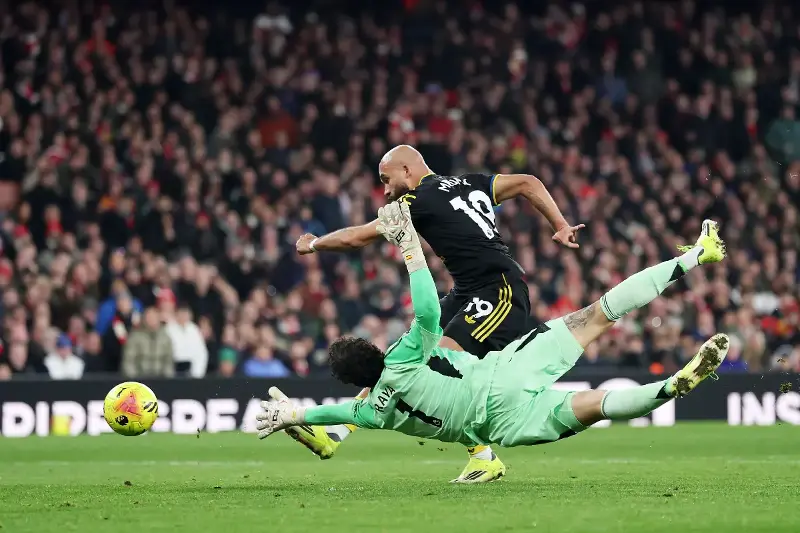
Yet, football rarely abides by the script. United, forced to chase the game, surged forward. Arsenal, maybe too confident, grew sloppy in possession. In the 37th minute, a disastrous back-pass from Zubimendi handed the ball to Bryan Mbeumo. The Cameroon striker coolly slotted past Raya to bring United level, exploiting Arsenal’s newfound vulnerability. The first half ended 1-1, with the contest finely poised, tension mounting, and both managers desperate for the upper hand.
Second-half drama: thunderbolts and turnarounds
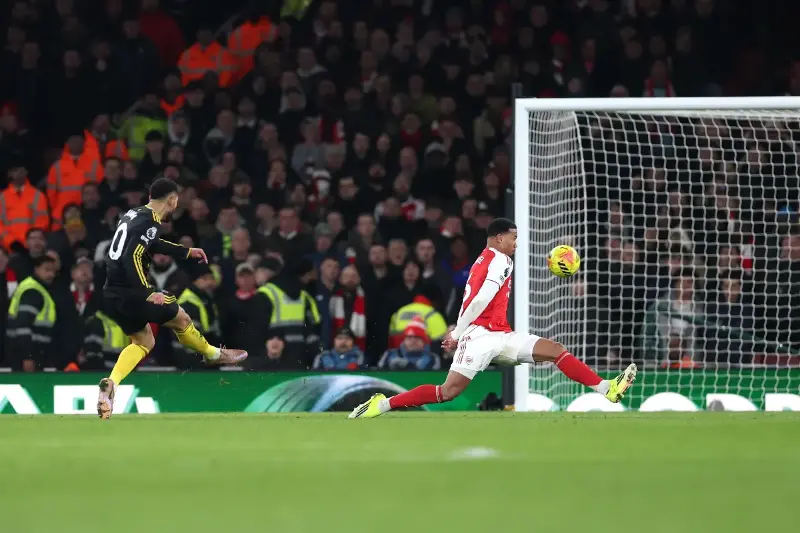
If fans expected the game to settle, they were in for a surprise. Just six minutes after the restart, United found themselves ahead. Dorgu combined sharply with captain Bruno Fernandes, then unleashed a ferocious shot that struck the underside of the bar before bursting into the net. Raya could only watch as the effort left the stadium in awe. Suddenly, the pressure was on Arsenal, and Arteta responded by throwing every attacking option onto the pitch. It was substitute Merino who capitalized on a messy corner in the 84th minute, firing the equalizer and briefly restoring hope—a late twist in an already compelling narrative.
But United weren’t finished. Merely three minutes later, Cunha weaved through Arsenal’s backline and curled an unstoppable shot into the far corner, making it 3-2. The Emirates fell silent. Even with seven minutes of added time, Arsenal couldn’t find another way through—left to rue their errors and missed opportunities.
Stats and streaks: numbers that tell the story
Some facts from this gripping Premier League encounter stand out:
- Arsenal conceded three goals at home for the first time since December 2023, ending a 121-game run in all competitions without letting more than two slip past them.
- The Gunners have now made mistakes leading directly to opposition goals in two of their last four league games—more than in their first 19 fixtures this season.
- United became the first visitors since Tottenham in October 2008 to score two or more goals from outside the box at Arsenal’s Emirates Stadium.
- Despite having fewer shots (10 to Arsenal’s 15) and a lower xG (0.73 vs. Arsenal’s 1.2), United’s long-range precision proved decisive.
Sometimes, a game is decided not just by overall dominance, but by capitalizing ruthlessly when it matters most.With this spirited 3-2 win, Manchester United leapfrogged into fourth place, applying fresh pressure in the race for Champions League qualification. Arsenal, meanwhile, saw their advantage over rivals Manchester City shrink to just four points, igniting speculation about late-season nerves. This match wasn’t just about goals; it was a reminder that even the best can falter under pressure, and new heroes can emerge when least expected.