



across classrooms from seattle to miami, a growing number of children are swapping crayons for keyboards—at least for a few hours each week. learning to code is no longer just an extracurricular activity reserved for the tech-savvy or the intensely curious; it’s swiftly becoming a core part of primary and secondary education. but what do teachers, the ones at the heart of this digital transformation, actually say about kids learning to code?
teachers consistently note that coding unlocks a new dimension of learning for students. many view it as much more than simply stringing together lines of commands to move a cartoon cat across a screen or to build a basic game. instead, teachers describe coding as “the new literacy,” one that arms kids with the cognitive gears needed in today’s technology-driven world.
one of the most common observations shared by teachers is that coding fosters problem-solving skills in children. a third-grade teacher in san jose recounts, “my students are learning how to think critically and logically. when a program doesn’t work as expected, they’re forced to experiment, hypothesize, and troubleshoot—almost like digital detectives. those problem-solving muscles get a great workout.”
this perspective is echoed in classrooms worldwide. a survey conducted by code.org found that 90 percent of teachers who integrated coding into their curriculum reported notable improvements in their students’ analytical reasoning abilities. students were seen planning ahead, breaking complex problems into smaller, manageable tasks, and collaborating more effectively with peers.
teachers often tell stories about the sense of empowerment coding brings. according to a fifth-grade teacher in chicago, “kids light up when they realize they can create something from nothing. it’s not just about learning to use apps; it’s about realizing they can build them, too.” this creative agency has ripple effects on student confidence—particularly for those who might not always shine in traditional subjects like math or language arts. for many, it’s a chance to excel and express themselves in new ways.
inclusivity is another compelling benefit highlighted by educators. coding, teachers say, provides a level playing field. it appeals to a wide range of interests and backgrounds, allowing both boys and girls to engage equally. “the best coders in my class are as likely to be girls as boys,” notes a teacher from atlanta. "everyone starts with the same blank screen, and what they build is up to them." curriculum designers have also made strides in incorporating diverse role models and accessible resources, which helps foster engagement across the board.
teachers also emphasize how learning to code strengthens patience and perseverance. unlike textbook exercises with a single correct answer, coding problems often require multiple attempts. “i see my students develop resilience,” says a middle school teacher in new york. "when their code doesn’t work, they’re motivated to try again, instead of giving up. it’s teaching them that making mistakes is part of learning, not a reason to quit."
teachers appreciate coding for its immediate, real-world relevance. many believe it bridges the gap between school and the jobs of the future. according to the bureau of labor statistics, computer and it-related fields are among the fastest-growing job sectors in the us. by learning to code, students are getting a head start. “even if they don’t become programmers, these skills translate to so many fields,” says a teacher from texas. "it teaches systems thinking, attention to detail, and digital literacy—all crucial for 21st-century careers."
on a practical level, teachers report that integrating code into lessons doesn’t have to mean complex programs or expensive equipment. thanks to platforms like scratch, code.org, and tynker, students as young as six can drag-and-drop color-coded blocks to build stories, games, and animations. for older students, tools like python and javascript become accessible gateways into the wider programming world. with affordable devices like chromebooks and tablets, schools are finding it easier than ever to bring coding into everyday lessons.
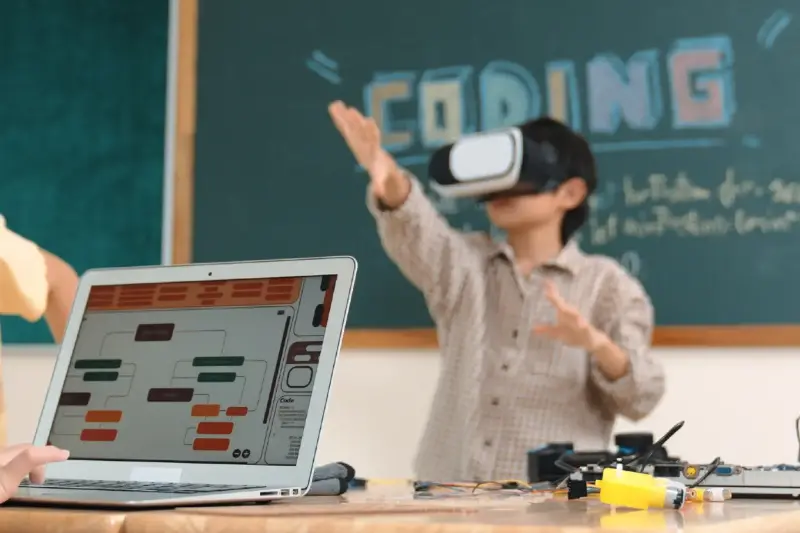
some teachers highlight that coding can act as a catalyst for cross-curricular learning. a teacher in colorado explains how her students used coding to visualize historical events, turning lessons about the civil war into interactive timelines. in math classes, coding projects help students see abstract algebraic concepts in action. coding becomes more than a subject; it’s an approach that blends math, art, reading, and science into engaging, hands-on learning.
but teachers also note the challenges. professional development remains a hurdle for some, as not all educators feel confident in coding themselves. the rapid evolution of technology can make it difficult to keep up. however, many schools are responding by investing in training sessions, peer-mentoring, and accessible resources so teachers can learn right alongside their students.
overall, educators agree that learning to code is opening doors—sometimes to worlds kids didn’t even realize existed. teachers are quick to point out that at its heart, coding isn’t just about future jobs, but about equipping students to understand and create in a digital world that touches every aspect of their lives.
interesting facts keep emerging as this movement grows. for instance, a recent gallup report showed that nearly 73 percent of teachers believe most students should be exposed to computer science as early as possible. and according to research by the education trust, students engaged in computer science classes are more likely to pursue higher education in stem fields, regardless of their background.
as coding becomes more mainstream, the conversation among teachers continues. their consensus can be summed up in a simple but powerful statement: when kids learn to code, they gain more than computer skills. they gain a way to think, create, and connect—a foundation that can carry them far, no matter where technology takes us next.