


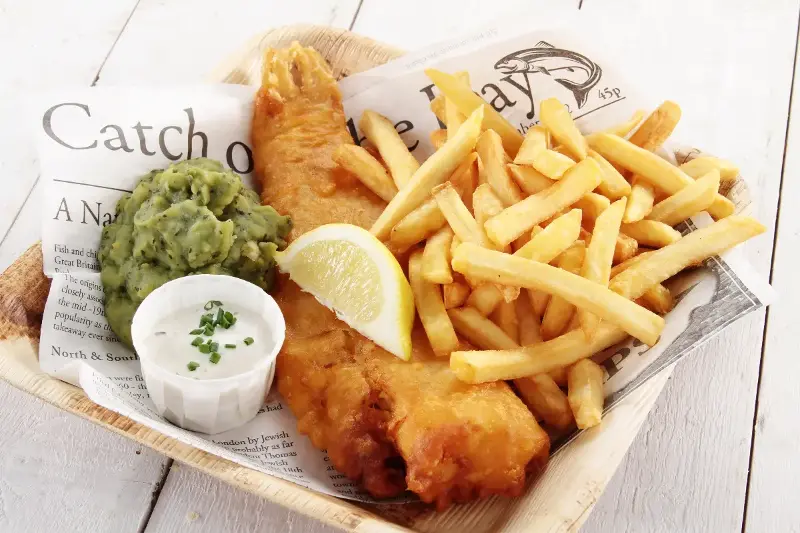
Few dishes tell a story as rich and surprising as fish and chips. Today, it’s a British staple—a beloved Friday night supper enjoyed in homes, at seaside kiosks, and bustling high-street “chippies.” But behind every golden, crispy bite lies a tale woven through centuries, immigration, industry, and the relentless spirit of the British working class.
Imagine the crowded streets of Victorian London or Manchester: fog curling over gas lamps, bustling crowds, and the irresistible aroma of sizzling fish. Fish and chips was once the food of the poor—a dish born out of necessity, graft, and adaptability. Fish fried in batter had migrated from Sephardic Jewish communities in the 16th century, while the humble chip—a crispy cousin of the French fry—arrived from Belgium or France in the 18th century. But it wasn’t until the mid-19th century that these two stars met, served together wrapped in paper and sold from modest stalls and street carts. For mill workers, dockers, and miners, this affordable meal was not just satisfying—it was survival.
Frying Up Success: Industrial Britain’s Culinary Invention
The Industrial Revolution played a pivotal role in propelling fish and chips from backstreets to national fame. With the expansion of railway lines, North Sea fish like cod and haddock could be transported fresh to inland towns. Meanwhile, potatoes grew abundantly in British soil, perfect for chipping and frying.
In 1860, Joseph Malin opened London’s first recorded fish and chip shop, soon followed by throngs of imitators across the country. By 1910, there were over 25,000 “chippies”—each one a beacon of comfort during hard times, especially during World War I and II when food shortages made other proteins scarce.
What began as a greasy street snack for the masses transformed into a symbol of British culinary identity—a plateful of resilience and resourcefulness that anyone could afford. For generations, queuing for fish and chips after a long shift brought dignity and a rare taste of luxury to millions.

Tastes Like Home: Rituals, Tradition, and Regional Twists
Fish and chips are more than a meal—they’re a ritual. Wrapped traditionally in newspaper (now replaced by paper for hygiene), the dish captures a nostalgia that cuts across generations. Each region has its spin: in Yorkshire, you might opt for scraps (crunchy batter bits), while in Scotland, “chippy sauce” blends vinegar and brown sauce. In the North, mushy peas or curry sauce might accompany your order; in the South, a generous shake of malt vinegar does the trick.
- Classic accompaniments include:
- Pickled onions
- Gherkins or pickled eggs
- A wedge of lemon
- Salt and lashings of vinegar
It’s a meal for sharing, for laughing over, for warming cold fingers by the sea or comforting hearts in bustling cities.
From Poverty to Pride: Why Fish and Chips Endure
How did such a simple dish rise to iconic status? Fish and chips thrived because they are:
- Affordable: Perfect for tight budgets, especially during tough economic times.
- Satisfying: The crispy, hot contrast of batter and fluffy chips is simply irresistible.
- Democratic: Eaten by royalty and road sweepers alike—you’ll find no class barriers at the chippy counter.
- Nostalgic: Each bite is a taste of Britain’s past, a quietly joyful celebration of survival, community, and resourcefulness.
Today, British fish and chip shops serve nearly 380 million meals every year; it’s no wonder they’re considered “the ultimate British comfort food.”
Fish and chips began as an answer to hunger, but they have become a symbol of joy, nostalgia, and national pride— loved far beyond Britain’s shores.
As you dip a chip into tangy vinegar or listen to the crackle of fresh-fried batter, consider: What other seemingly humble traditions have shaped the soul of a nation—quietly, generously, on the streets where people gather, share, and dream?