


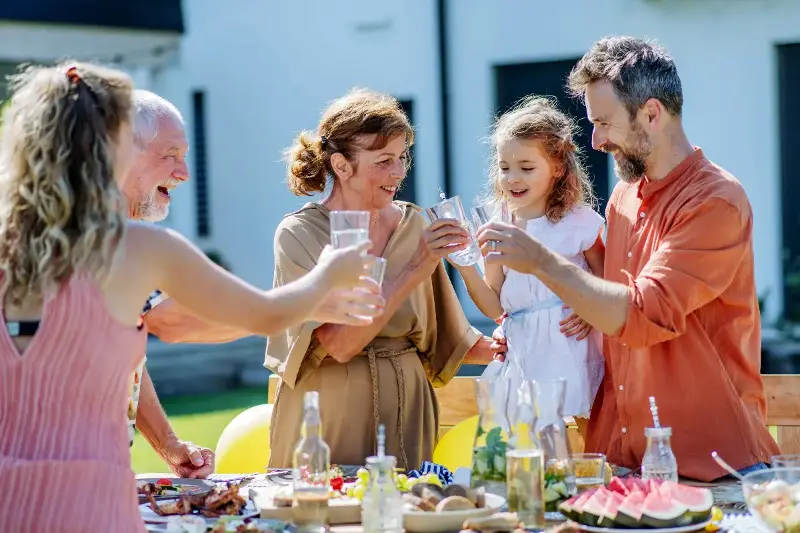
Family traditions are often simple: pancakes on Saturday mornings, a yearly birthday photo, a special song before bed, or calling grandparents every Sunday. Yet these repeated moments can have a powerful effect on children’s emotional development. They tell a child, “This is who we are, and you have a place here.” Psychologists often describe childhood as a period of rapid change. Children grow, start school, make friends, and encounter new fears and expectations. Predictable traditions provide a reassuring anchor amid that change. When a family repeats a meaningful activity, children know what to expect—and that sense of predictability can make the world feel safer.
Routines create a sense of security
Not every routine becomes a tradition, but many traditions begin with routines. A consistent bedtime story, Friday movie night, or morning goodbye ritual can help children transition through the day with less stress. These rituals are especially valuable during difficult periods, including moving house, parental separation, illness, or the arrival of a new sibling. A familiar activity does not remove the challenge, but it can remind children that some parts of family life remain steady. Small rituals that build security include:
- Letting each child choose a song for the car ride to school once a week.
- Sharing one “good thing” and one “hard thing” from the day at dinner.
- Using the same comforting phrase or handshake before an important event.
- Making a seasonal meal together, such as soup on the first cold day of autumn.
The value is not in doing these activities perfectly. It is in their repetition and the attention family members give one another while doing them.
Belonging is built through shared stories
Traditions also create a family identity. Children learn where they come from through stories, recipes, celebrations, photographs, languages, and everyday customs. Research on family narratives has found that children who know more about their family’s history may be better able to understand themselves as part of something larger than the present moment. A child who hears how a grandparent arrived in a new country, how parents met, or how the family overcame a difficult time learns more than dates and names. They learn resilience, connection, and continuity. Families can preserve these stories in accessible ways:
- Record older relatives telling stories on a phone.
- Create a photo book with captions written by children.
- Cook one family recipe and discuss where it came from.
- Mark cultural, religious, or national holidays with age-appropriate explanations.
- Ask children what new traditions they would like to create.
This last point matters. Traditions are not only inherited; they can evolve. Giving children a role in shaping them strengthens their sense of ownership and inclusion.
Happy memories are made in ordinary moments
Many adults remember childhood traditions not because they were expensive or elaborate, but because they were emotionally rich. The smell of a particular meal, the excitement of decorating the home, or a parent’s silly annual joke can become a lasting memory cue decades later. These moments work because they combine repetition with emotion. A yearly beach walk may seem ordinary at the time, but over the years it becomes a marker of togetherness.
Children often remember the feeling of being noticed, welcomed, and included more vividly than the event itself. Importantly, traditions do not need to look the same in every household. A single parent, blended family, foster family, multigenerational home, or family living far from relatives can all create rituals that fit their lives, budgets, beliefs, and schedules.
The lasting gift of “us”
The most meaningful family traditions are rarely the most polished ones. They are the ones that make children feel safe enough to be themselves and certain that they belong. In a fast-moving world, a repeated meal, story, walk, or celebration can quietly say: we return to one another. Perhaps the best question for any family is not, “What tradition should we copy?” but, “What small moment could we repeat until it becomes part of our shared story?”