


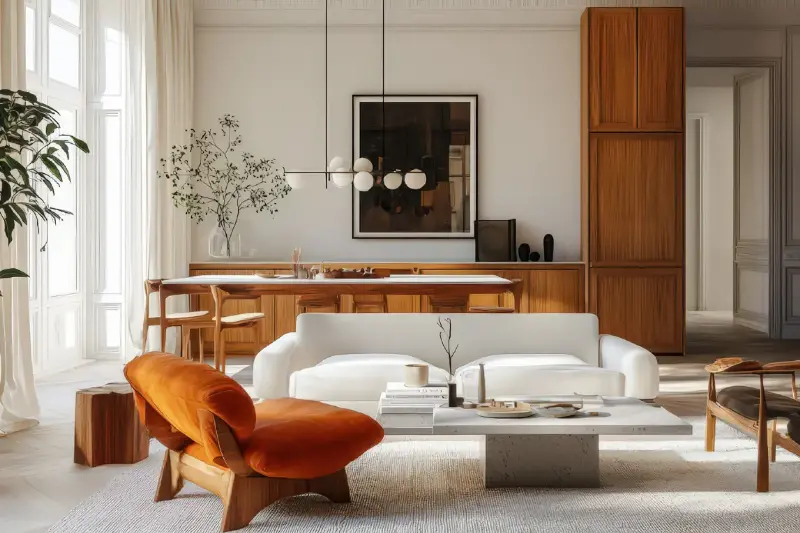
minimalism has long been associated with pristine white walls, sleek surfaces, and uncluttered rooms. for decades, it conjured images of glossy design magazines filled with scandinavian furniture, monochromatic wardrobes, and the gentle elimination of ornament. yet in recent years, this design movement has undergone a profound transformation, shifting from a purely visual style to a way of living that is as much about the heart as it is about the home. today, minimalism has become less about what things look like—and more about how they feel.
the origins of minimalism as an aesthetic movement can be traced back to the post-war era, particularly in the art and design scenes of the 1960s and 1970s. artists like donald judd and dan flavin championed the ethos of ‘less is more,’ using stark forms to rebel against the chaos and excess of the past. soon, this stripped-down sensibility migrated from art galleries to architecture, fashion, and eventually interior design. for years, the guiding principle seemed clear: neutral tones, clean lines, and open spaces—decor reduced to its bare essentials.
but despite the visual orderliness that the minimalist lifestyle promised, many started to question whether living among so much emptiness necessarily led to greater peace. a turning point came with the rise of social media, where the proliferation of photo-perfect, minimalist homes began to feel performative, rigid, and even cold. people wondered if they were missing the point.
what has emerged is a new, more emotional dimension to minimalism—one that places the emphasis not on what is removed from our environments, but rather on what remains: meaning, relationships, and well-being. psychologists have noted that this deeper kind of minimalism is less about aesthetics and more about cultivating a sense of intentionality in everyday life. instead of chasing an idealized look, people are considering how the objects they keep and the spaces they create make them feel.
contrary to the icy, impersonal minimalism of the past, emotional minimalism—sometimes called “warm minimalism”—encourages individuals to surround themselves with things that genuinely matter. this could mean keeping a collection of books that inspire, or displaying family photos that bring joy. rather than aspiring to an empty, magazine-worthy home, emotional minimalists are more concerned with reducing mental clutter. decluttering is no longer an act of purging for the sake of space, but a mindful process that helps people reconnect with themselves and others.
this shift is deeply rooted in a broader cultural move towards wellness and mental health. as the pace of modern life has accelerated and digital distractions have multiplied, many have found that choosing less is not just about design—it’s about survival. studies have shown that physical clutter can increase stress and anxiety, while a more curated environment can foster calm and focus. the emotional benefits of minimalism are now just as celebrated as the visual ones.
another factor in the rise of emotional minimalism is the quest for authenticity. in a world that often values consumption and outward appearances, choosing to live with less can be an act of defiance. it signals a willingness to look inward, to prioritize self-awareness over status. for both men and women, this often means reevaluating not just their possessions, but their habits and relationships. minimalism, in this context, becomes a tool for self-discovery and personal growth.
the idea of emotional minimalism is also closely tied to changing definitions of success and fulfillment. for previous generations, having more was often equated with having made it—bigger homes, flashier cars, fuller closets. now, younger people in particular are embracing the notion that true abundance can be found in experiences, meaningful connections, and peace of mind. the minimalist lifestyle, once synonymous with austerity, is being reimagined as a pathway to joy and balance.

popular culture has echoed this transformation. books like marie kondo’s “the life-changing magic of tidying up” and documentaries such as “minimalism: a documentary about the important things” have focused as much on emotional well-being as on decluttering tips. kondo’s focus on items that “spark joy” encourages followers to consider the emotional resonance of their things, not just their visual impact. the philosophy’s appeal is not limited to a single demographic—minimalism, in its newer, emotional form, resonates across genders and ages.
the shift is also reflected in how spaces themselves are being designed. while the look of minimalism still features simplicity, there’s a greater emphasis now on warmth and personality. this has led to the rise of cozy textures, natural materials, and personal mementos that add depth and comfort, without sacrificing simplicity. plants, handmade ceramics, or heirloom pieces are increasingly at home within minimalist spaces, signaling a blend between the past and the present, aesthetics and emotions.
perhaps most telling, minimalism’s emotional turn has expanded its influence far beyond the home. workplaces are incorporating minimalist principles to reduce stress, while digital minimalism—limiting screen time and digital clutter—has gained traction as a way to reclaim attention and emotional bandwidth. the core question has shifted: instead of asking “how does this look?”, people now ask, “how does this make me feel?”
as minimalism continues to evolve, it serves as a reminder that our environments are not just backdrops for our lives, but active participants in our emotional health and happiness. the minimalist home, wardrobe, or lifestyle is no longer simply about what catches the eye; it is, at its heart, about what matters most to the soul. by making room for meaning, minimalism has become richer, more relatable, and, ultimately, more human.