


Hollywood actor and filmmaker Jesse Eisenberg has taken a significant step in embracing his roots by becoming an official citizen of Poland. Adding to the recognition of his artistry, Eisenberg’s directorial venture "A Real Pain" recently won an Oscar, marking a significant milestone in his career. While his latest work did not earn him a personal Oscar, the greater reward seems to have been the deepened connection to his heritage and the cultural ties forged along the way.

A Cinematic Journey Rooted in History
"A Real Pain," a drama-comedy film, presents a poignant narrative that navigates the themes of family, heritage, and reconciliation. The story follows the journey of two cousins, played by Jesse Eisenberg and Kieran Culkin, as they travel to Poland after the death of their grandmother, a Holocaust survivor. The film dives into the complexity of emotions and landscapes that link personal and collective histories, offering a blend of humor and sincerity.
Culkin’s performance garnered widespread acclaim throughout the awards season, culminating in his Oscar win for Best Supporting Actor. In a heartfelt acceptance speech, he added a personal anecdote that captured audience attention, asking his wife about the possibility of expanding their family. Culkin's accolades underline the film's emotional depth and its capacity to converse powerfully with audiences around the world.
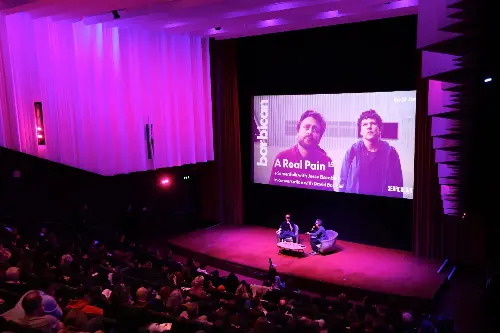
Honouring Heritage and Seeking Connection
While Eisenberg may not have held the golden statuette himself, his personal journey seemed to take a parallel path of discovery and recognition. Speaking at a ceremony in New York, where he was awarded Polish citizenship in March, Eisenberg expressed profound honour and excitement. The actor, known for roles that often explore complex characters and narratives, found a personal story of his own worth pursuing.
The film was inspired by a deeply personal experience—the passing of Eisenberg’s great aunt in 2019, who had fled her home country in the face of World War II. This connection to history fuelled his desire to not only tell a meaningful story but to reopen the doors to a cultural relationship that had lain dormant. For Eisenberg, the production process in Poland did more than just create a film; it rekindled a bond lost through the trials of history.

Rediscovering Polish-Jewish Connections
Eisenberg’s motivations extend beyond personal fulfilment, with a vision of bridging the narrative gaps between Jewish and Polish communities. As "A Real Pain" traces the unresolved connections of the past, Eisenberg sought to do so in his life as well. Applying for Polish citizenship became a symbolic step in acknowledging the enduring links with his ancestors.
In interviews, Eisenberg recalled fond stories of his family’s friendships with Polish locals, unveiling a positive shared heritage that he hopes to revive. The film's creation in Poland resurfaced nostalgic tales heard in childhood, inspiring Eisenberg to not only reconnect personally but also to foster a broader social revival between communities.
Eisenberg’s newfound citizenship, completed with a formal ceremony, is more than an accolade to be hung next to his awards—it's a bridge to a future where cultural heritage is treasured and amplified. Alongside his wife, Anna Strout, whose family also hails from regions in Poland, Eisenberg is keen on weaving further narratives that honour this linkage. Additionally, he expressed intent to explore more projects in Poland, enlarging the canvas for cultural storytelling.
By accepting Polish citizenship, Eisenberg sets a precedent of honouring past ties while earnestly building inclusive futures. His commitment to enhancing relationships between Jewish and Polish people is a testament to art’s powerful capacity to unite, heal, and chart new beginnings. As the world watches this story unfold, both on and off screen, it's a vivid reminder of the enduring impact individuals can make by embracing the rich tapestries of their history.