


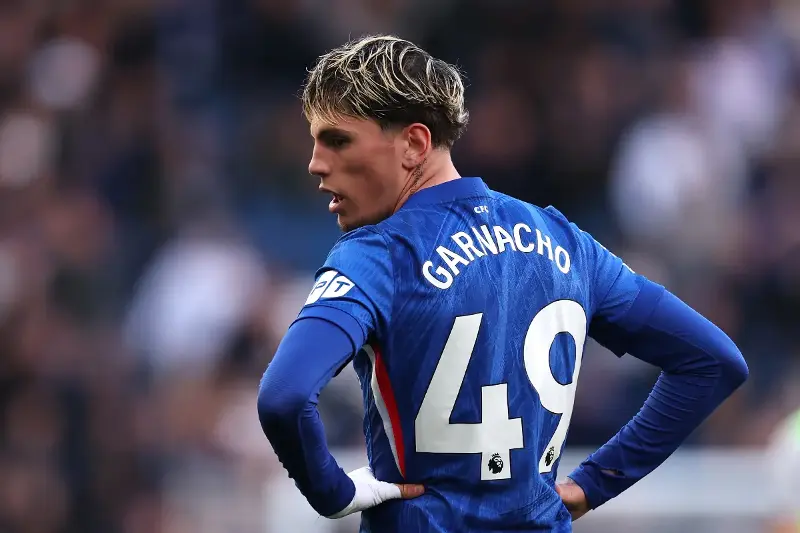
Aston Villa have agreed a deal to sign Alejandro Garnacho from Chelsea, with the Argentina international set to join on loan with a conditional obligation to buy. The conditions are understood to be easily achievable, while the overall package — including the loan fee — meets Chelsea’s valuation of the winger.
Chelsea had reportedly sought £42.6m for Garnacho, who joined the Blues from Manchester United for £40m last summer. The 21-year-old had not reported for Chelsea’s pre-season training as he sought a move away from Stamford Bridge. For Villa, the deal addresses a clear squad need. Unai Emery has been looking to add quality and directness in wide areas, and Garnacho’s pace, left-sided attacking threat and experience of Premier League pressure make him an appealing option.
The Rogers transfer changes everything
Garnacho’s proposed arrival follows a remarkable piece of business between the same clubs: Chelsea’s British-record £117m deal to sign Morgan Rogers from Aston Villa. Villa’s sale of Rogers creates a major accounting profit, helping the club navigate both Premier League and UEFA financial regulations. Yet it also leaves Emery needing to rebuild a squad that has suffered several departures while preparing to compete across multiple fronts. At first glance, a straightforward permanent transfer for Garnacho would have made sporting sense. Instead, the structure of the move has become crucial because both clubs are operating under intense financial scrutiny. Key facts behind the complicated arrangement include:
- Chelsea and Villa were recently fined by UEFA for breaches of financial sustainability regulations.
- Chelsea remain under a four-year UEFA settlement agreement, despite not playing in European competition this season.
- Villa need the Rogers profit to count as strongly as possible in their financial calculations.
- UEFA rules can treat closely linked transfers between the same two clubs as a player exchange transaction.
Why UEFA’s rules matter
UEFA can classify two transfers as a player exchange transaction when they are completed within 45 days of each other and feature the same or similar payment obligations, deadlines or dates. If the Rogers and Garnacho transfers were assessed as one linked exchange, Villa would not be able to book the full profit from the £117m Rogers sale in the usual way. Instead, UEFA calculations could focus on the net difference between the two deals — significantly reducing the financial benefit Villa gain from selling their star midfielder. That explains why a standard permanent deal for Garnacho was problematic.
But a loan with an obligation to buy is not automatically a solution either. UEFA have tightened rules around loan arrangements designed to delay the accounting impact of permanent transfers. If a condition triggering an obligation to buy is considered “virtually certain”, UEFA can require both clubs to recognise the player as a permanent signing from the beginning of the loan.
A delicate balance for both clubs
Chelsea believe the conditions in Garnacho’s agreement are “easily achievable”, but there must still be enough uncertainty for UEFA to accept that a permanent move is not guaranteed from day one. That creates a delicate sporting and financial balance. Villa need Garnacho to play, develop and contribute immediately. Chelsea, meanwhile, need him to retain his value and complete the pathway toward a permanent sale. The Blues will be wary of a repeat of Harvey Elliott’s difficult spell at Villa Park last season, when limited opportunities raised concerns about a talented player’s development and future market value.
For Garnacho, however, this could be a defining opportunity. If he rediscovers his confidence and produces the fearless wing play that made him one of English football’s most exciting young attackers, Aston Villa may gain far more than a clever solution to a financial puzzle.