


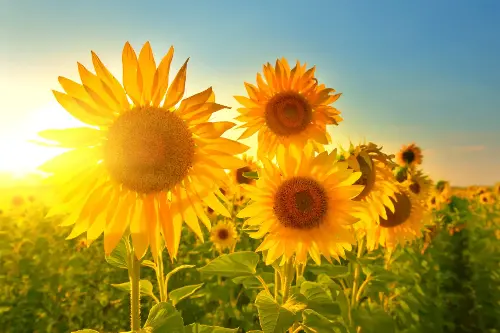
Sunflowers, with their bright, expansive faces, seem to symbolize all that is sunny and optimistic about our natural world. These radiant blooms are not just visually stunning but are packed with fascinating facts and features that might surprise even the keenest of flower enthusiasts.
The Origin and Historical Significance of Sunflowers
The story of sunflowers begins in the Americas, where they were first domesticated in what is now the central and eastern United States. Historical evidence suggests that sunflowers were cultivated by Native Americans as far back as 3000 BCE, making them one of the first plants to be grown primarily for food purposes. The indigenous tribes used sunflowers for their seeds, which are rich in fats and oils, and for medicinal purposes, leveraging their properties to treat a range of ailments.
Sunflowers made their way to Europe in the 16th century, carried by explorers who were fascinated by their peculiar beauty and potential agricultural value. By the 18th century, sunflowers had become widespread across the continent, valued not only as a decorative plant but also for sunflower oil, which began to be produced commercially.
The Botany of Sunflowers
Sunflowers belong to the genus Helianthus, which roughly translates from Greek as 'sun' (helios) and 'flower' (anthos). This name is fitting given their unique characteristic of heliotropism when young. Heliotropism is the directional growth in response to the movement of the sun; young sunflower buds track from east to west during the day to maximize photosynthesis efficiency, though they face east again each night in anticipation of the sunrise.
A mature sunflower typically doesn't exhibit this behaviour. It is a misconception that adult plants follow the sun: once they reach maturity, the blooms generally face east throughout the day. This adaptation allows them to attract more pollinators, as many bees and butterflies prefer to feed in warm flowers.
Sunflowers boast quite the stature, with some varieties growing over 3 metres tall. The flower head, or composite, is not a single flower but a cluster of hundreds to thousands of tiny flowers called florets. These inner florets mature into the seeds that are commonly enjoyed as snacks.
Sunflower Seeds and Their Benefits
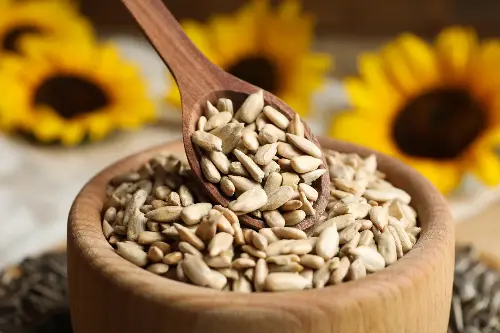
Speaking of seeds, sunflower seeds are not merely a delicious treat; they're packed with nutrients beneficial for health. Rich in healthy fats, vitamins E and B1, magnesium, and selenium, the seeds help promote cardiovascular health and can boost the immune system. Moreover, sunflower seeds are a source of phytosterols, compounds that help lower cholesterol levels in the body.
Cultural Impact and Uses
Apart from agricultural and nutritional uses, sunflowers have made significant cultural impacts as well. Perhaps the most famous artistic reference to sunflowers is Vincent van Gogh's series of paintings depicting the bloom. These artworks remain some of the most recognizable images in the art world, symbolising joy and artistic genius.
In gardening, sunflowers are cherished for their ability to attract pollinators like bees and birds. Sunflowers are also used in companion planting to reduce pests naturally in vegetable gardens, demonstrating their utility extends beyond beauty and nutrition.
Commercial Uses
On a commercial scale, sunflowers are cultivated not just for their seeds but also for sunflower oil, which has become a popular cooking oil globally due to its light flavour and high smoke point, making it ideal for frying foods. The oil is also used in cosmetic formulations for its moisturizing properties.
Furthermore, sunflower lecithin, a byproduct of sunflower oil production, is utilised in the pharmaceutical industry as an emulsifier. From food products to medicine and cosmetics, sunflowers pack a sizeable punch in commercial uses.

Conservation and Environmental Impact
Environmentally, sunflowers are a positive crop. They are remarkably adaptive and can thrive in a range of soil types, though they prefer well-drained, nutrient-rich soils. Their deep roots can help reduce soil erosion and improve soil health after being harvested. Additionally, sunflowers are known to extract toxic ingredients such as lead, arsenic, and uranium from contaminated soil. This makes them an excellent choice for rehabilitation of soil in polluted areas, a practice known as phytoremediation.
Sunflowers continue to be an environmental and aesthetic beacon that not only beautifies landscapes but also provides practical benefits. With their golden yellow discs radiating warmth and optimism, sunflowers are truly wonders of nature worth admiring and studying. Whether it’s their intriguing history, surprising botanical facts, significant health benefits, or vast commercial value, these radiant blooms hold a fascinating place in both nature and culture.